
Last month, I worked with Rethink 794 advocates to connect with additional community members and raise awareness of the advocates’ goals regarding removal and its impact. Through these efforts, we’ve brought community members into conversations on the future of the corridor and invited their input on WisDOT’s Lake Interchange Study.
Tabling at a Local Run Club
Year-round, the Buena Tierra Run Club gathers at Zócalo Food Park before starting their Wednesday running route toward the lakefront through the Third Ward. Zócalo is located just a couple of blocks south of the 6th Street Bridge – just one of the main connection points between Walker’s Point and Downtown Milwaukee.
At the March 18th run, I set up a table with one of the Rethink 794 advocates, Taylor Korslin. We connected with both food park patrons and runners about their experiences getting around downtown, whether for a run or in their daily routine. Many folks we talked to were aware of the conversation around the removal alternative, but less familiar with Rethink 794’s goals or WisDOT’s Lake Interchange Study. Some conversations included individuals who commute on or near I-794 and work in the buildings adjacent to the highway. Some runners from the South Shore neighborhoods expressed concern about the congestion. Some came to the table, eager to discuss and advocate for the boulevard (removal) alternative. These various perspectives reflect a range of experiences living and working near the corridor and contribute to our ongoing dialogue about the future of Downtown Milwaukee.
We also invited everyone to write down their thoughts on sticky notes and place them on a roll plot of the corridor (pictured), creating a visual representation of community input that we can share more broadly.
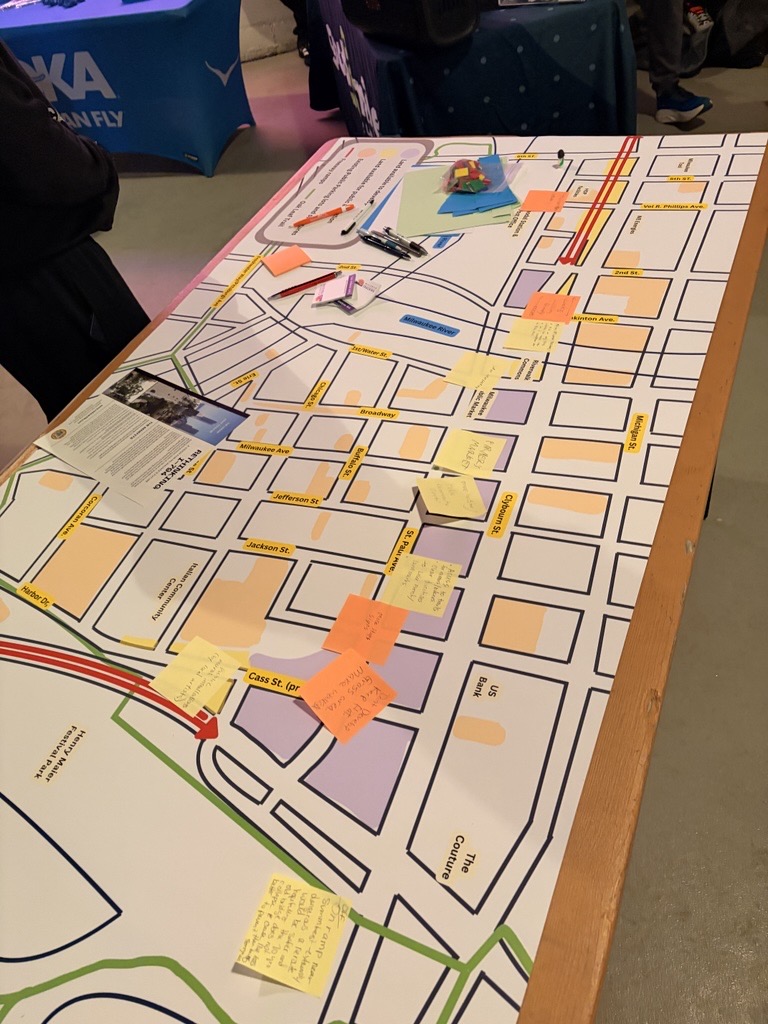
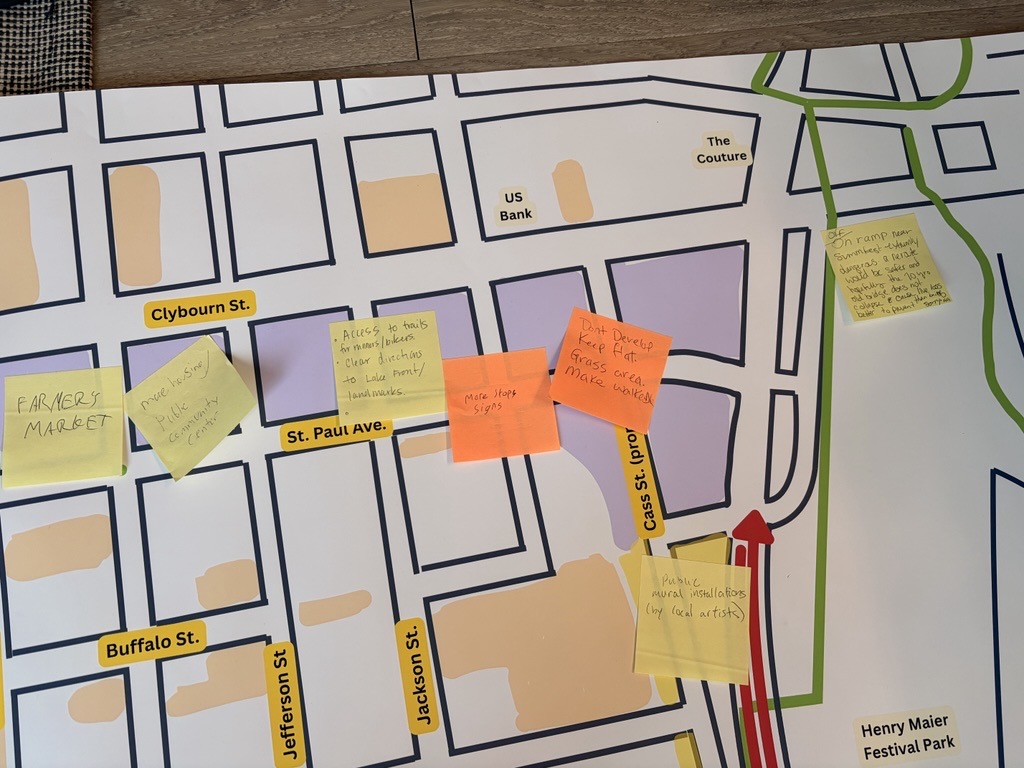
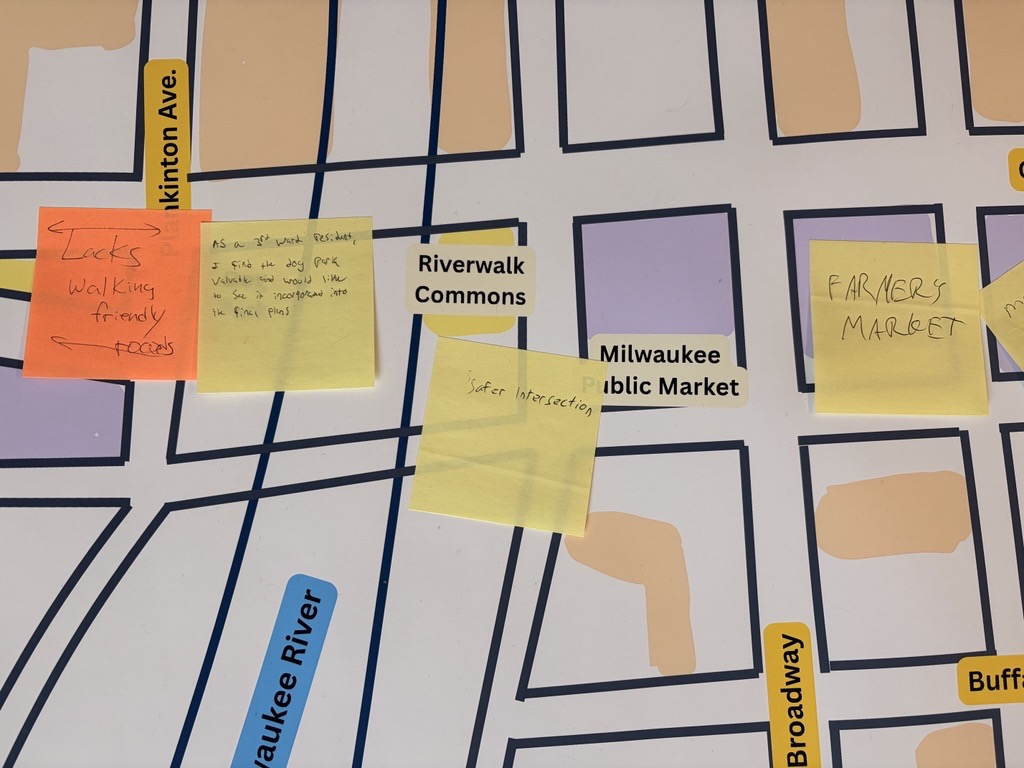
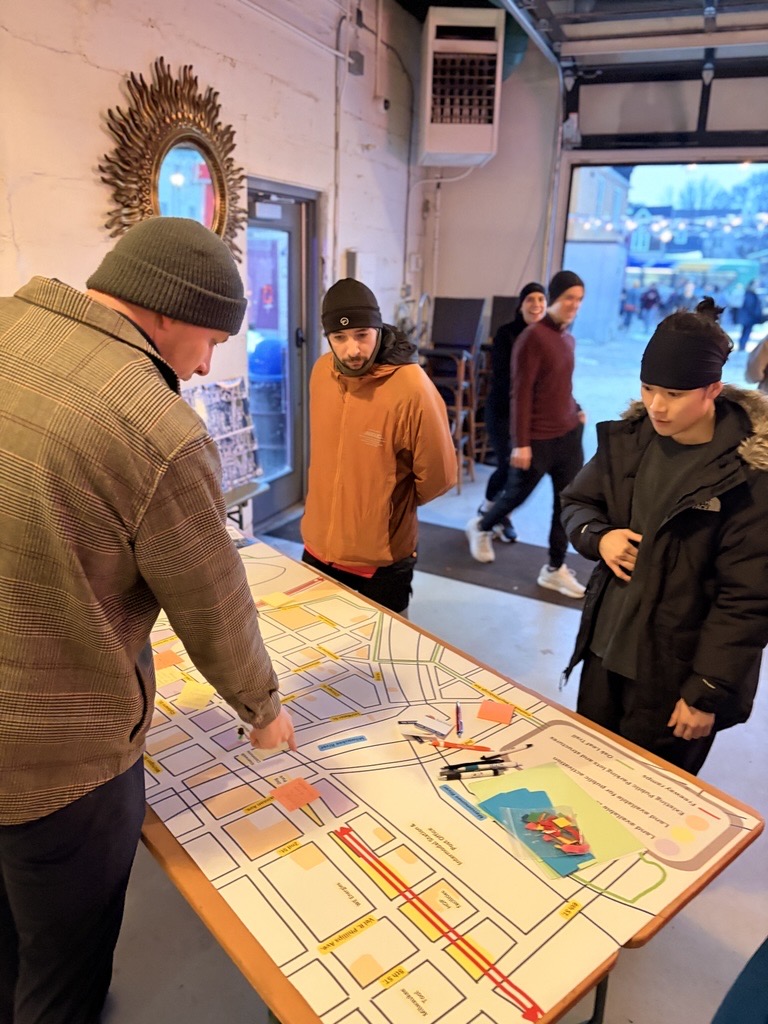
Many perspectives called for streets that better support walking and biking, improved wayfinding, and fewer conflict points with highway infrastructure. Some participants also expressed ideas for potential land use if the freeway is removed and a boulevard is constructed in its place, including community space for events and activation, public art, green infrastructure, and workforce/affordable housing. These ideas highlight the optimism around the removal alternative in WisDOT’s Lake Interchange Study – catalyzing a once-in-a-generation opportunity to create an intentionally designed boulevard that prioritizes and expands affordable housing, connects bus transit with passenger rail, pedestrian, & bicycle infrastructure, and supports long-term community stability and growth.
Walk & Roll 794 – Part 2!
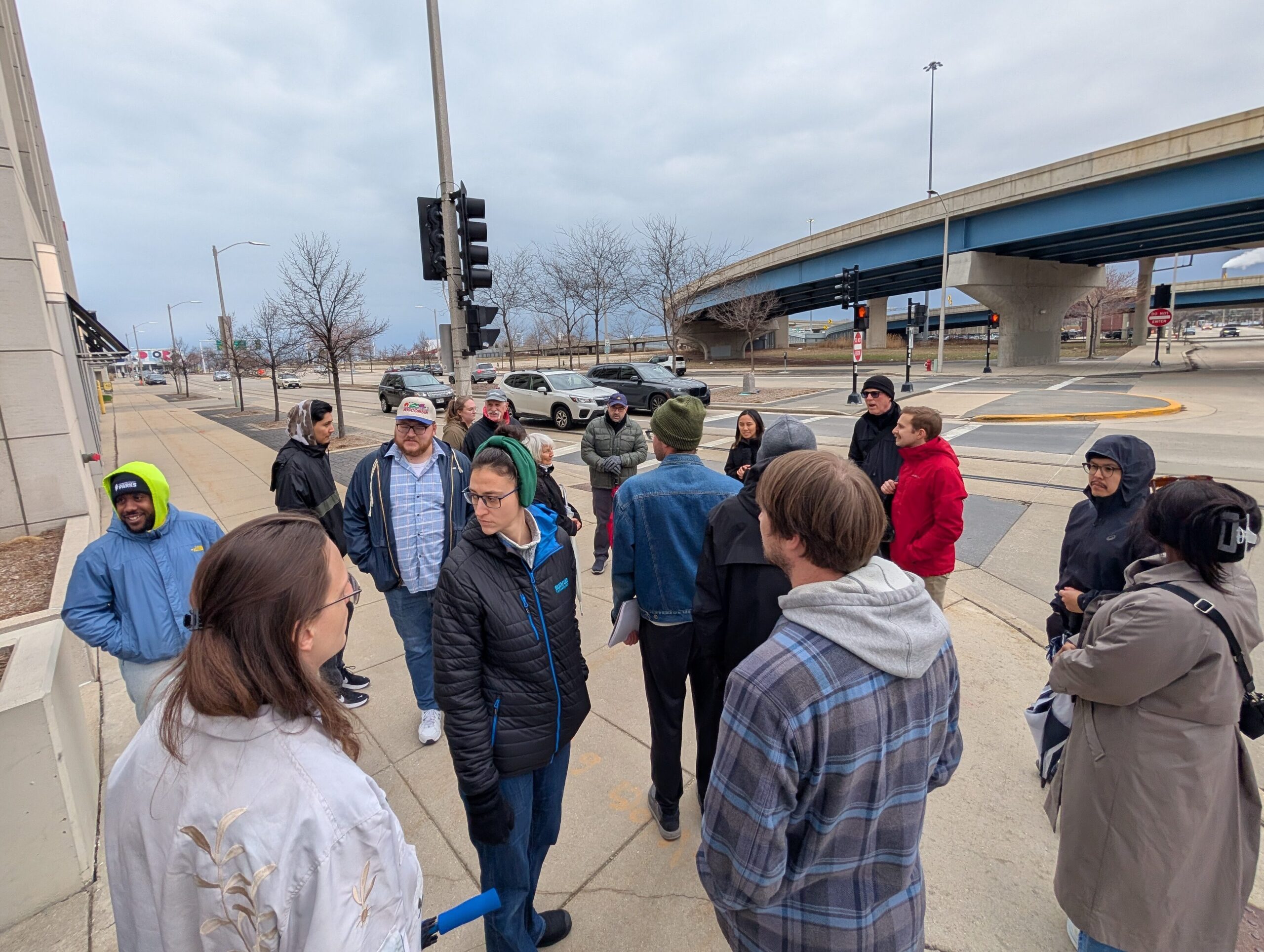
Another initiative I’ve led through Rethink 794 is coordinating and co-facilitating Walk & Roll audits along segments of the I-794 corridor. The aim of this Walk & Roll series is to bring together community members to experience the impacts of the freeway within its footprint and surrounding areas, create space for dialogue, and envision new ways that the corridor could better support mobility, access, and connection for all.
On March 31st, advocates and interested community members gathered to conduct the second walk & roll audit in the series, this time focusing on the Lincoln Memorial Drive and Clybourn intersection.
A crossroads between Downtown and the lakefront, the Clybourn and Lincoln Memorial Drive intersection sits adjacent to and disconnects major lakefront destinations, including the Milwaukee Art Museum, the Summerfest North Gate, and Discovery World. As part of the interchange with I-794, it also dissects the north/south mobility of pedestrians and cyclists along the Oak Leaf / Hank Aaron State trail
Under cool and windy conditions, Walk & Roll participants shared their safety concerns across a range of transportation modes and provided meaningful observations about the experience navigating Clybourn between Van Buren St. and Lincoln Memorial Drive. In partnership with Independence First, able-bodied participants experienced crossing conditions firsthand using wheelchairs to better understand mobility and accessibility barriers. The experiences illuminated immediate challenges, including the poor quality of pavement at crossings, long distances, and very short walk phases (~10 seconds), reinforcing how existing conditions limit safety and access for many.
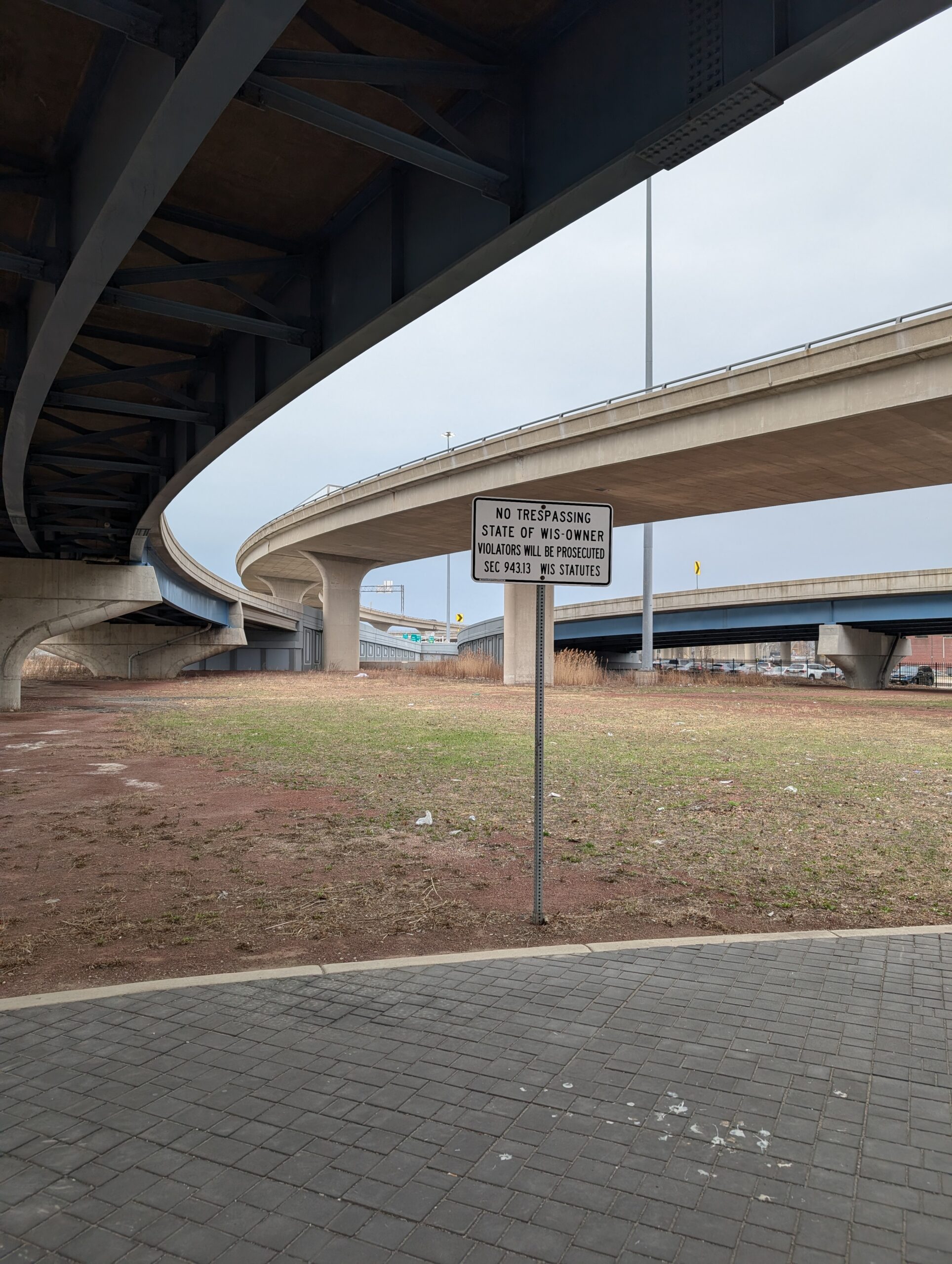
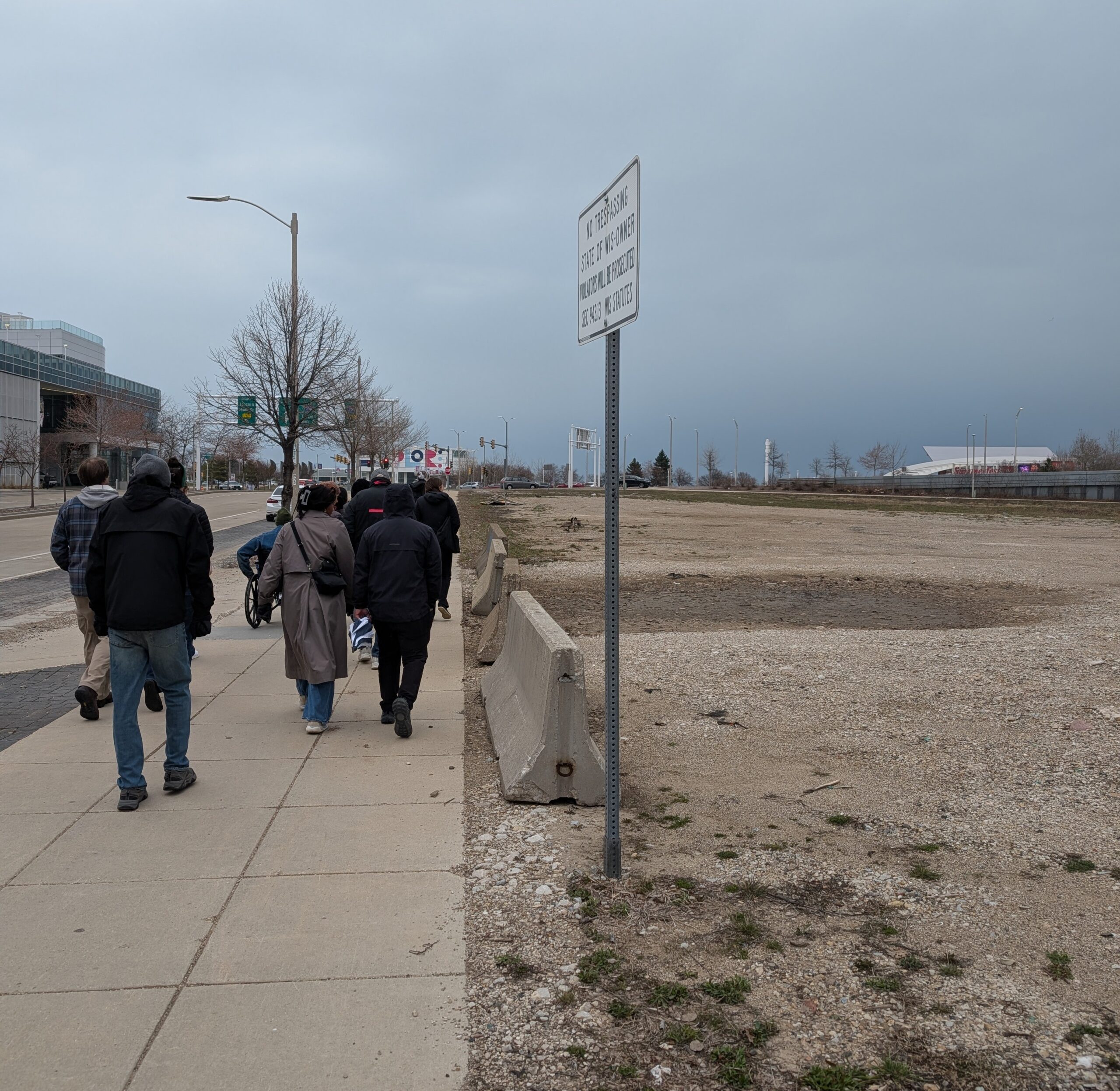
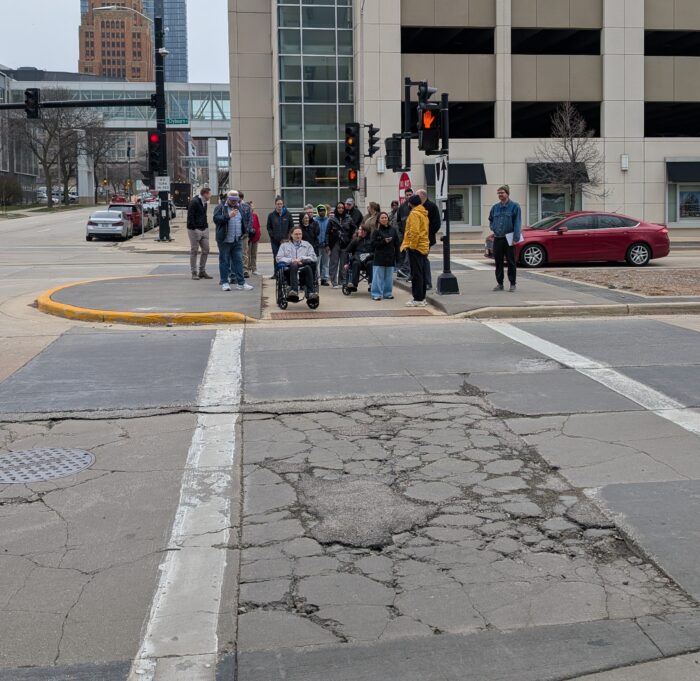
Some of the discussion also paralleled perspectives shared in the first Walk & Roll audit; The freeway structure, in addition to the disjointed at-grade street design, creates an uninviting environment where pedestrians are deprioritized in a place that has potential to become a multimodal haven. In the first Audit, the mobility and accessibility conversation pointed to the potential for the area around the Intermodal Station and HOP Operations and Maintenance facility to become a transportation hub and gateway to the City of Milwaukee. Renderings by John Everitt in 2024 reflected a similar vision and are available to view here. In the second Audit, participant ideas reflected the potential for the creation of an intuitive, accessible connection point for people to reach the lakefront without a vehicle, while improving mobility for the whole region.
A report summarizing the event, including discussion and vision from participants, is available for download here.
To stay up to date with Rethink 794’s news and updates, sign up for the email list here.