by Raphie Torralba, Transportation Policy Analyst
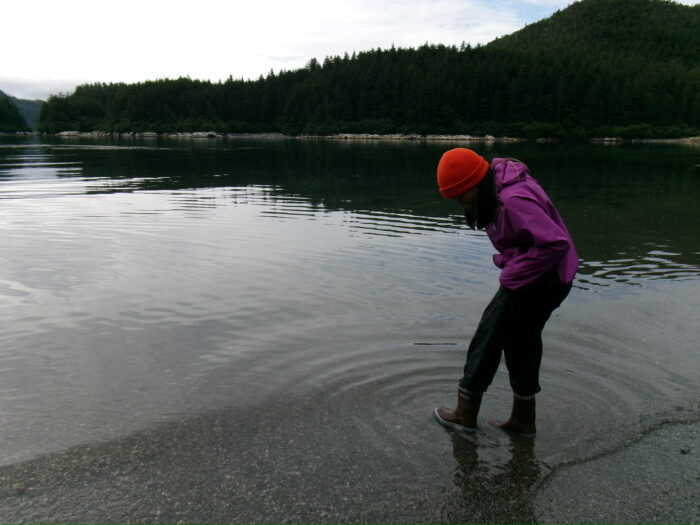
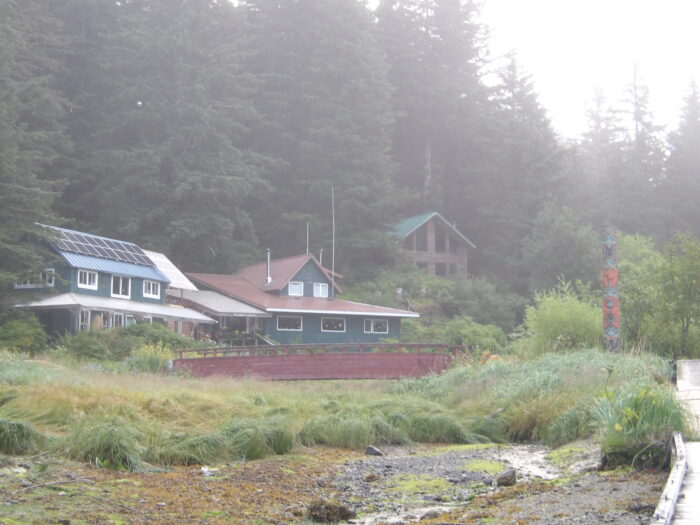
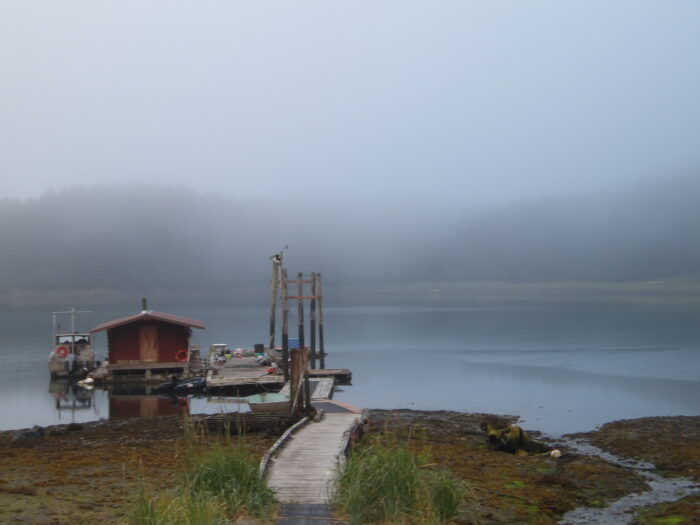
In mid-August, I spent a week in the Inian Islands of Southeast Alaska to attend a climate action leadership retreat with the Tidelines Institute. Landing in Juneau at the start of my trip, I met up with my retreat cohort to board a sea-plane, and then a fishing boat. We flew and floated over turquoise glacial waters to arrive at the “Hobbit Hole”, a charming homestead tucked away in a small cove on one of the islands.
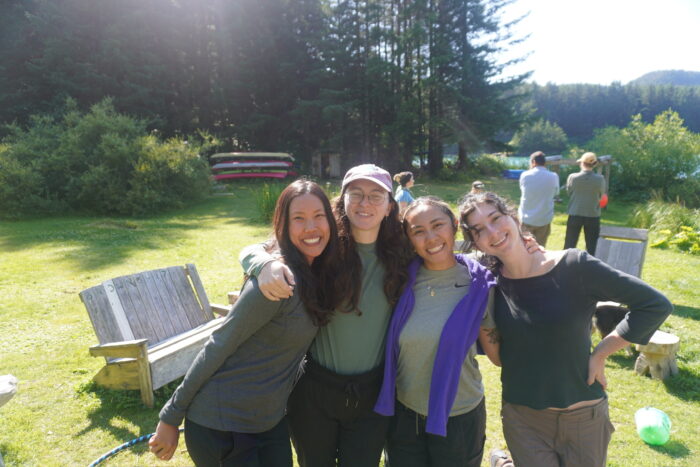
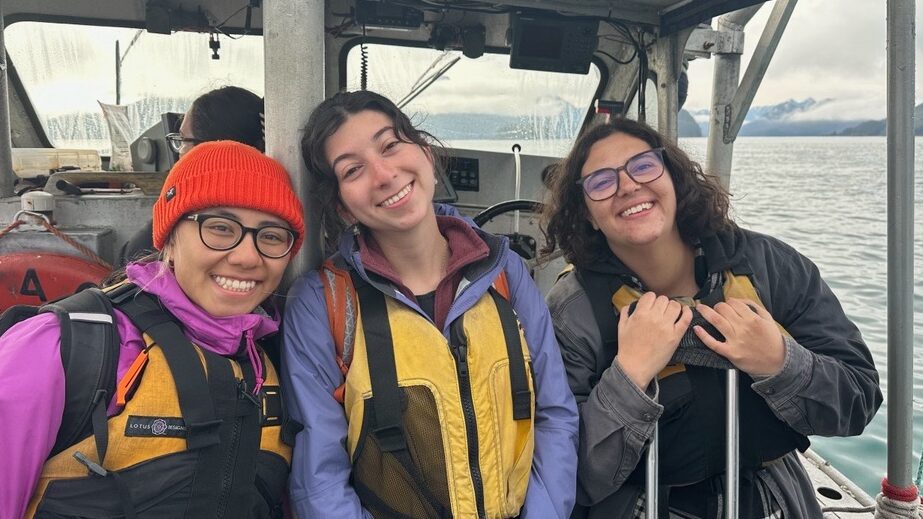
Pulling into the cove, we were surrounded by spruce and hemlock trees and, on our trail, a few curious sea otters peering up at our vessel. Perched between Glacier Bay National Park and the Tongass National Forest, the Hobbit Hole sits within the largest contiguous stretch of protected wilderness on the planet. This is where I would stay for the next 8 days alongside 10 other climate leaders and professionals, learning about the history of climate change science, exploring the systems that keep us dependent on fossil fuels, and grappling with what it takes to move toward a different future. Outside of our discussions, we were living those ideas in real time, building community while exploring the Alaskan wilderness.
Learning in the Inian Islands
Over the course of the week, our days were split between classroom discussions and excursions on and around the islands.
Discussions took place in the living room of the main cabin of the homestead. One of the key themes was that scientists have known about and warned of the risks of a changing climate for decades. In 1988, when climate scientist James Hansen testified before the US Senate, presenting early scientific evidence that human-caused greenhouse gas emissions were already warming the planet, confirming what climate scientists had been modeling for years. His testimony helped bring climate change and the need for climate action into the public and political arena. In the 38 years since Hansen’s testimony, we’ve added roughly as much carbon to the atmosphere as what had accumulated in the previous 200+ years.
That conversation naturally led us to some deeper questions: If we know why and how we got to this point, what’s in the way of eliminating or slowing down our emissions? We examined fossil fuel dependence, our political and economic systems, which strategies for advocacy and organizing have served us best in different situations, and so much more.
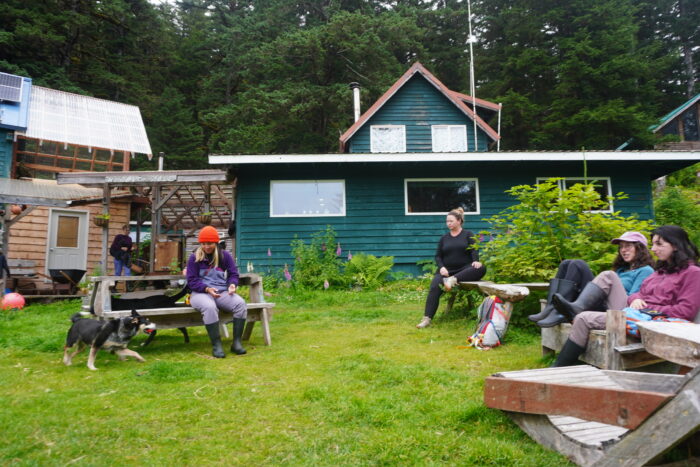
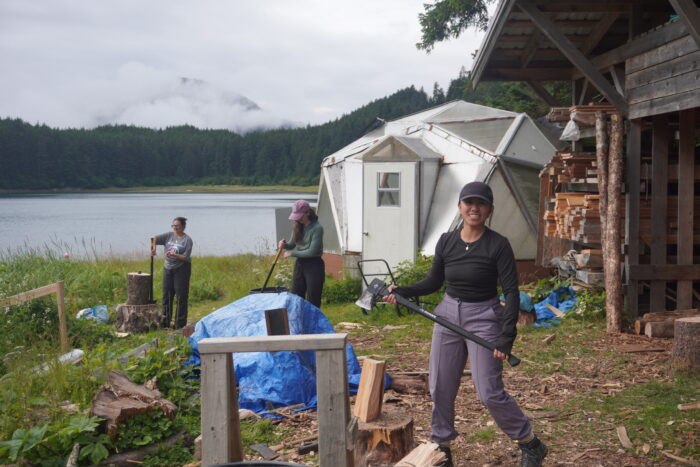
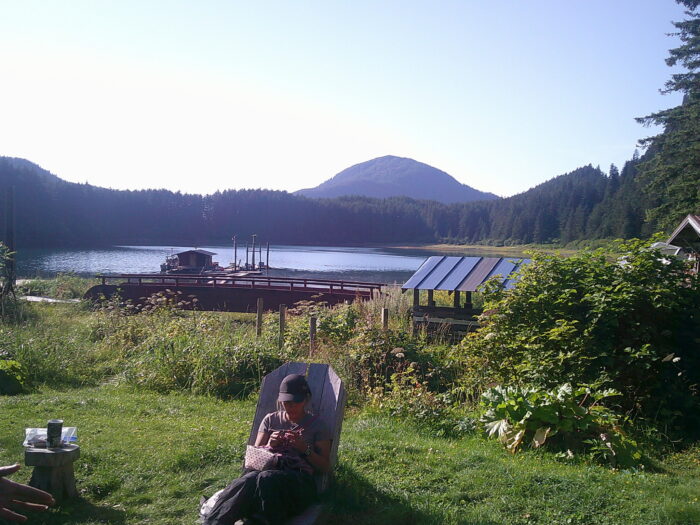
Being surrounded by Alaskan wilderness at the Hobbit Hole, I processed those ideas much more deeply. The campus operates completely off the grid, powered by a combination of hydroelectric and solar energy and operated year round by a caretaker family (a married couple with young children). Through the summer, a few students and young professionals support the family as staff.
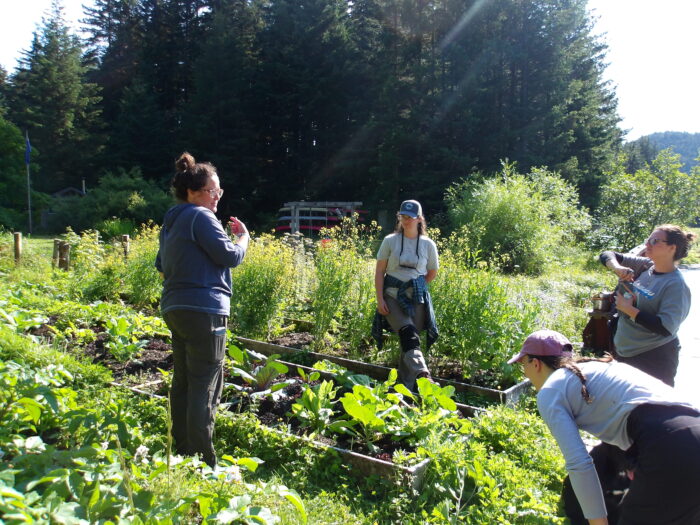
Each member of the retreat cohort had opportunities to contribute to the collective operation of the campus, supporting the caretaker family and staff with the tasks around the homestead. In addition to the tours of the hydro and solar power systems, we lent our hands to harvesting produce from the garden, preparing meals for the cohort, and even carrying logs down from the forest for chopping (the caretakers need to have enough logs in stock for at least the next three winters). Given the rainforest environment, the Hobbit Hole primarily operates on hydro. During our stay, the weather was unexpectedly sunny, allowing us to prepare one of the nightly meals entirely with solar power.
At home, it can be easy to not always think about the systems that sustain our lives. I have the privilege of not worrying about if the lights will turn on when I flip the switch, or if I’ll be able to head to the grocery store when my fridge is empty. At the Hobbit Hole, those things are harder to ignore. I became much more conscious of my own typical resource and energy use, more aware of the collective effort it took to make sure everyone had what they needed, and more attuned to the rhythms of the natural environment around us.
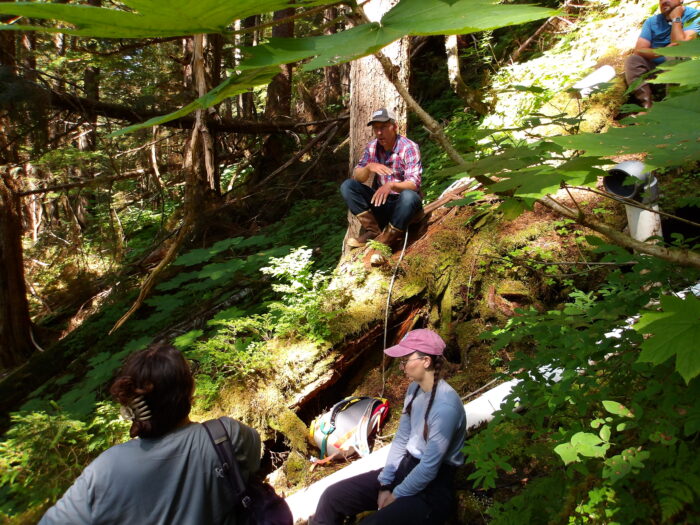
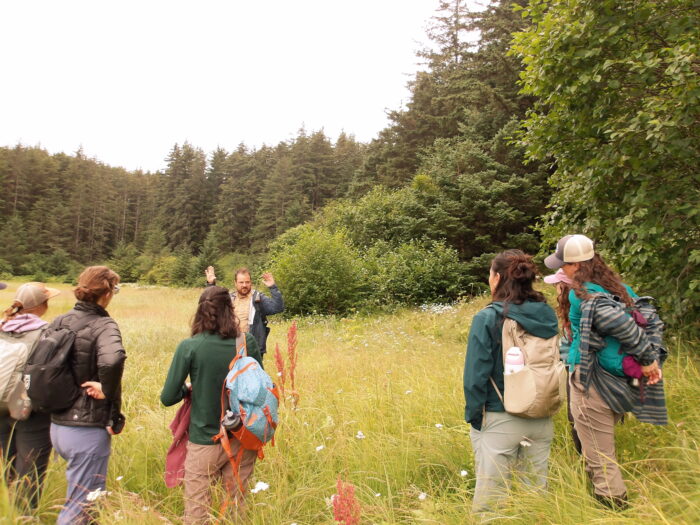
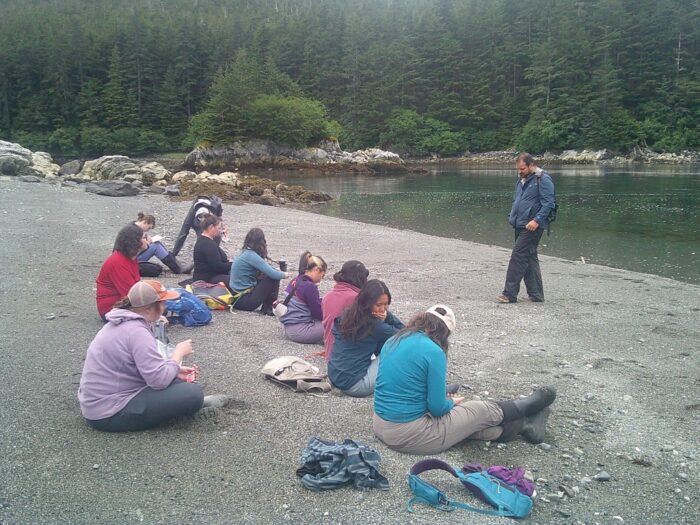
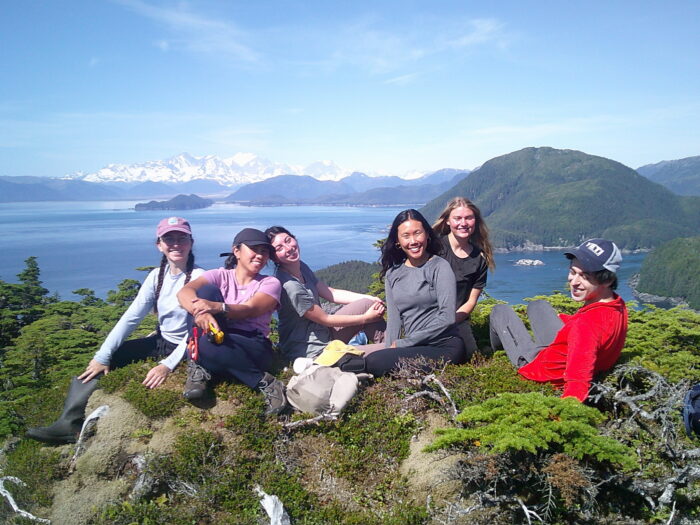
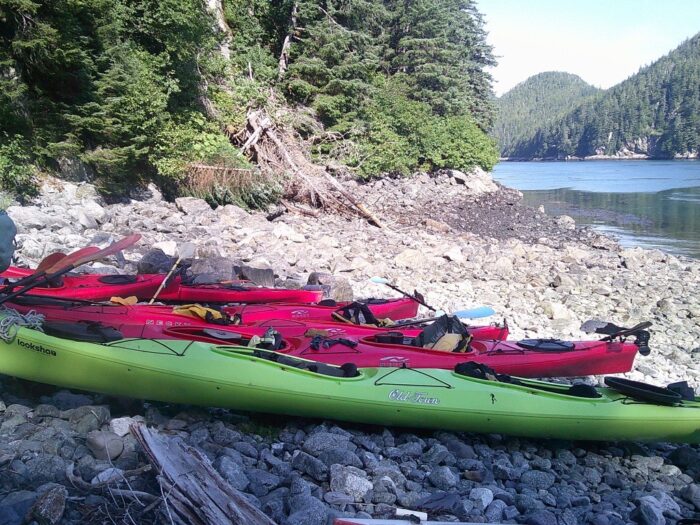
Much of our learning happened outside of the classroom, too. Most afternoons, we’d head out by kayak, boat, or on foot to explore the islands around us. These excursions were another way to experience and process what we’d been discussing throughout the week, and made me feel more connected to the web of life.
Getting a Little Science-y
One evening, after a hearty foraged dinner, a few of us were chattering about a meme that we’d seen circulating on the internet — Everything Eventually Turns Into Crabs. Being in the presence of climate scientists, one of them fact checked the funny claim with some of the background science:
In standard conditions the ocean absorbs carbon dioxide (CO2) from the atmosphere. Cold water absorbs CO2 especially well. Meanwhile, shellfish and other calcifying marine life form their exoskeletons or shells through a biochemical process; binding calcium with carbonate in the ocean water. As we continue to emit mass amounts of carbon into the atmosphere, the ocean is also absorbing greater volumes of carbon dioxide, slowly altering its chemistry over time. The water becomes more acidic as hydrogen ions bind with carbonate, reducing the carbonate available to shellfish and other calcifying organisms. In other words, shellfish have to compete with the ocean (!) for carbonate to build and maintain their shells.
Our increased emissions over time create this seemingly invisible shift with very real consequences. With fewer shellfish able to successfully build and maintain their shells, there are fewer of these organisms to support the ecosystems around them. Their shells provide habitat for other marine life. Their bodies become food for other animals. That includes humans, as shellfish populations make up a portion of commercial and subsistence fishing. So, something as simple as mussels being able to form their shells is deeply connected to a much larger web of life.
(Having my Bachelor of Science in Biology, I approve of the fact check haha)
The web of life was also paralleled in our final exercises of the retreat, which included building and presenting a power map. By the end of the week, each member of our cohort had created power maps laying out the people, institutions, and relationships that could help move an issue we care about forward. As I developed my map, I grounded myself in the work that I’m doing here in Milwaukee, working with communities to advocate for sustainable transportation decisions locally. The final exercise helped me draw the connections between the greater systems that impact our climate globally and the local ‘web of life’ that shapes climate action here in Wisconsin.
I spent 8 days in a space where I could deeply reflect on the systems that shape our relationship with the climate and collaborate with fellow climate leaders. During that time, I workshopped new ways to connect with my communities and build a base that grows in its collective understanding of the role that transportation decisions have in building more sustainable communities.
Getting to experience all of this by paddle and trail, surrounded by the Alaskan wilderness, was just an added bonus. 😉