
1000 Friends of Wisconsin Transportation Team
Jen Walker, Community Engagement Manager
Raphie Torralba, Transportation Policy Analyst
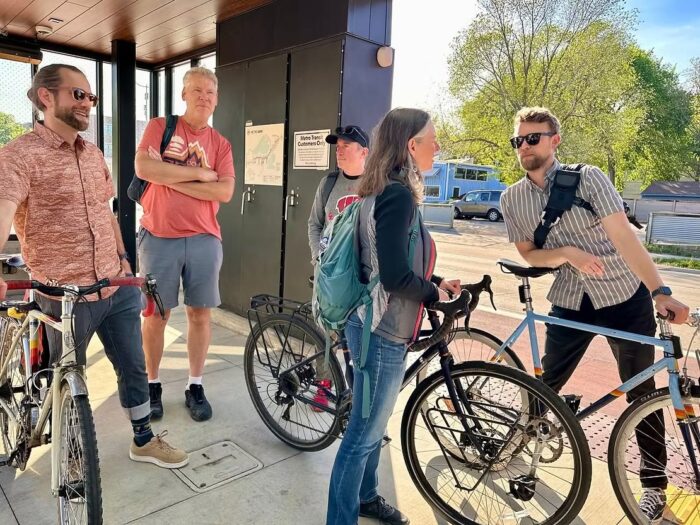
Wisconsin’s Draft Active Transportation Plan 2050 is a welcome and long-overdue effort to establish a statewide vision for walking and biking. Wisconsin has gone nearly three decades without updates to its statewide bicycle and pedestrian plans, during a period when technology has changed greatly and communities across the state continue to experience largely the same amount of road safety risk in those 30 years.
From 1994 to 1998 and 2020 to 2024, Wisconsin averaged 57.6 pedestrian deaths annually (source: FARS). The pedestrian and bike fatality data highlight the need to build an active transportation plan that addresses today’s roadway safety challenges while advancing the infrastructure and policy that enables more transportation options beyond driving.
The draft includes important goals and acknowledges many of the challenges facing people who walk and bike. But after such a long wait, Wisconsin residents should expect much more.
The plan does identify desirable outcomes. It lacks, however, clear details and mechanisms to explain how our state might expect to achieve them. Critical issues are either missing or need more attention, including: Complete Streets, dedicated funding for infrastructure, programs and education, key infrastructure priorities, interagency coordination, emerging forms of electric mobility, and investment prioritization strategies.
A Missed Opportunity
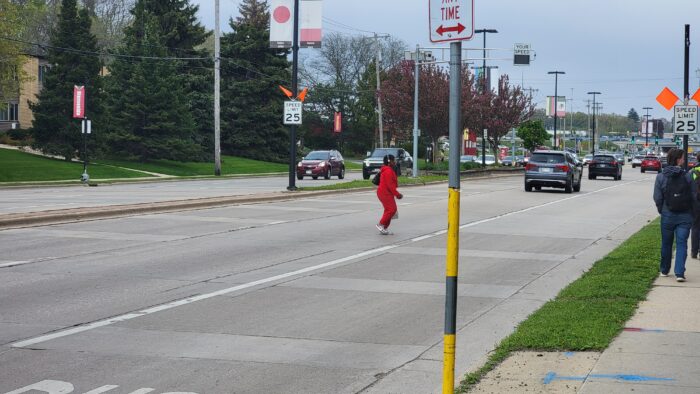
10 years ago, Wisconsin ranked 2nd in the statewide bicycle-friendly community rankings. With the loss of our Complete Streets policy in 2015 and our state’s funding contributions to bicycle infrastructure falling to 49th in the nation, our rankings have declined ever since – and we now stand at 27th, according to the League of American Bicyclists. The draft Active Transportation 2050 Plan (ATP 2050) ignores policy specifics and serious funding objectives. Without more ambitious goals, we can expect to see a continuation of the status quo or even a decline in active transportation in the years ahead, even though (and as the ATP itself points out) 31% of Wisconsinites don’t drive.
The draft Plan’s discussion of safety was also puzzling. While safety is given top billing in the document, its subsequent pages lack the adequate urgency or strategy to move the needle on improving walking and biking safety.
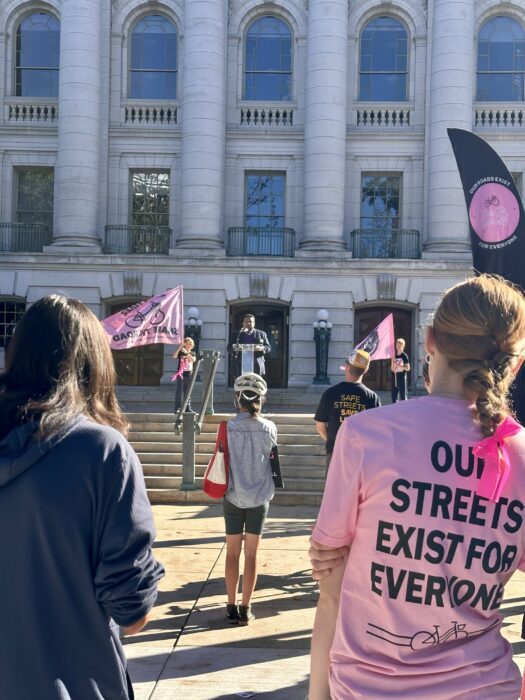
Just this month, Jen joined nearly 800 other Wisconsin residents in the Ride For Your Life, a community ride and walk held in Madison to honor the lives of the most vulnerable road users that have been senselessly lost to traffic violence. During that event, State Representative Russell Goodwin discussed “AB 655 / SB 659 “Sasha’s Bill” that he is co-sponsoring to curb extreme speeding, and called on Governor Evers to declare traffic violence a public health emergency in our state. The Active Transportation Plan 2050 is an opportunity to think and act boldly to prioritize safety, but unfortunately, the ATP misses the mark in this regard as well.
Let’s Look to our Neighbors: Minnesota Example
The contrast with neighboring Minnesota is informative. In its Bike+ plan, Minnesota has developed a far more detailed pedestrian and bicycle planning approach. Their documents provide practitioners, elected officials, agencies, and advocates with clearer guidance about the kinds of infrastructure that pose barriers, how to address those barriers, funding guidelines, and implementation strategies. Wisconsin’s plan could provide a similarly useful and more actionable roadmap.
We agree that Wisconsin needs an updated Active Transportation Plan (ATP). But after waiting decades for a new plan, it’s fair to expect more.
The draft has plenty of good intentions, but it falls short on the details, funding, and commitments needed to actually turn those intentions into safer streets and better options for people across Wisconsin.
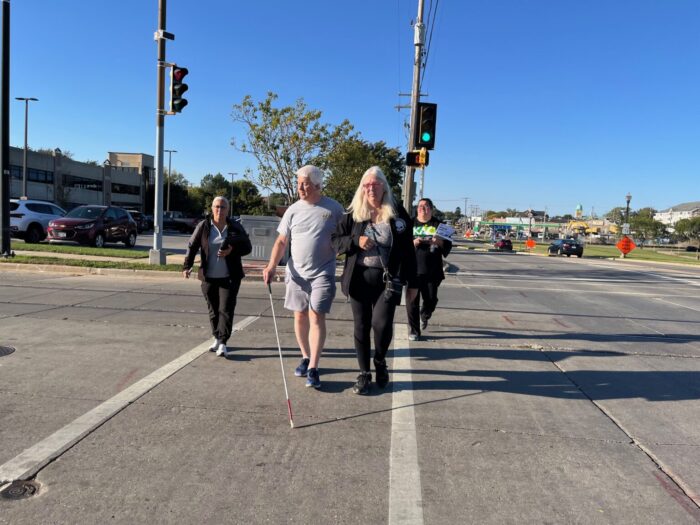
Recommended Improvements
Here are the improvements we encourage WisDOT to consider before the Plan is finalized.
1. More Accountability and Transparency
The draft provides too little information about who developed the plan. The report notes that “various WisDOT divisions and representatives of WisDOT Region” led the Technical Advisory Committee, and a Steering Committee included “WisDOT staff as well as representatives of other state agencies, MPOs, Regional Planning Commissions, foundations, advocacy organizations, and interest groups.” Which departments and divisions? Which organizations? Who were the authors? The final plan should identify the staff, agencies, consultants, and advisory groups involved. It also needs clearer information about the public outreach and participation process.
The lack of clarity on who authored the plan follows through to later sections of the plan, which lacks details on who is responsible for making sure the things in the plan happen. There’s also no way to see how, or to whom, progress will be reported or measured.
2. Better Public Communication and Engagement
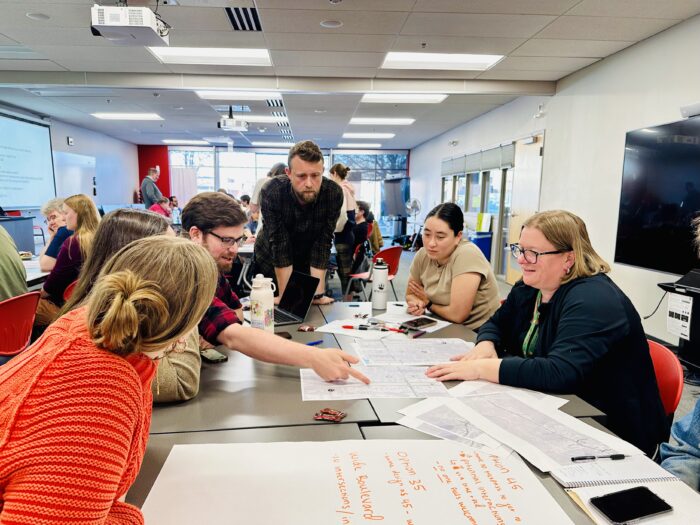
The public engagement process for this plan was conducted 3 to 4 years ago, in 2022 and 2023, according to WisDOT’s Community Engagement Plan. And although statewide reach appears to have been achieved, the report tells us nothing about participants’ demographics or how historically underserved populations were engaged. Public feedback is condensed into six themes, but it could be more intentional about connecting these ideas directly to the Plan’s goals and objectives.
Additionally, after embarking on a roughly five-year process to update the Active Transportation Plan, WisDOT is allowing only one month for public review and comment. The October 24th deadline is not even noted on WisDOT’s ATP website.
And one month is not enough time, especially as WisDOT’s process in completing the draft has lain dormant for several years, and there has been no effort to re-engage the public or other stakeholders at this time.
3. Take Safety Seriously
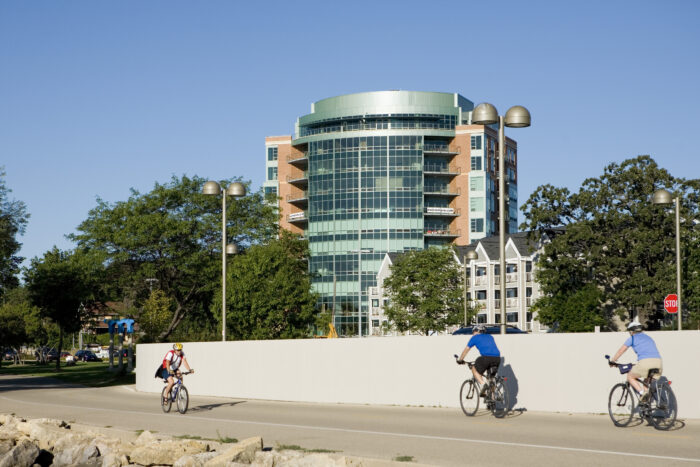
Safety was the public’s top concern, with 93% of participants saying they want to walk or bike more but are held back by safety concerns. Despite this clear message, the Draft ATP highlights a decline in serious and fatal crashes involving pedestrians and bicyclists since 2020 while overlooking the much longer-term rise in bicyclist and pedestrian deaths. A six-year snapshot should not obscure decades of troubling trends or the disproportionate risks continually faced by people walking and biking, which have nearly doubled nationally since 2009 according to Smart Growth America’s Dangerous By Design 2026 update. Stats in Wisconsin follow the national curve. WisDOT must respond to these real, long-term trends, as well as what it heard from the public, with stronger policies and investments aimed at preventing serious injuries and deaths and making active transportation genuinely safe and accessible.
Advocates have been emphasizing the need for more detailed ways to implement safety plans for vulnerable road users for a long time. Back in January 2025, 1000 Friends of WI collaborated on a comparison of Vulnerable Road Safety Assessments (VRUSA) in the Midwest. Here’s what we said about it back then: “In Wisconsin, the DOT listed possible strategies to improve safety, yet they were light on details for implementation. Advocates can continue to remind WisDOT of their recommended strategies and push for supplemental implementation strategies.” A familiar and still-relevant refrain today. (you can read about our VRUSA report here).
4. Be More Specific About Infrastructure
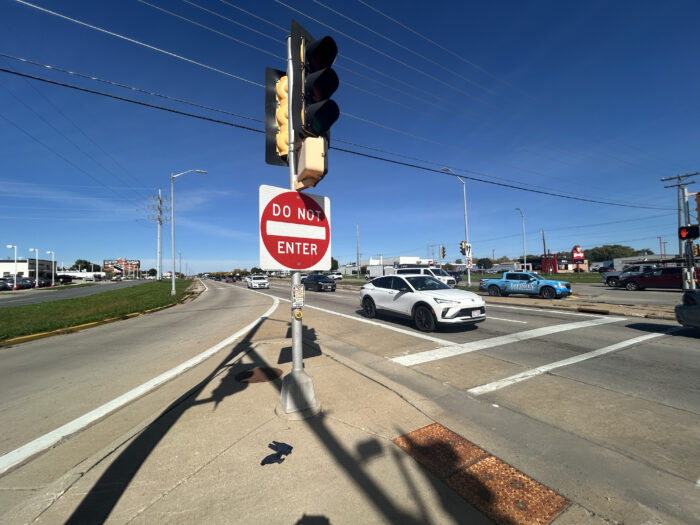
Goals that appear in the plan, such as designing and maintaining infrastructure and facilities that prioritize active transportation safety, are a step in the right direction, yet they are too vague. The plan should more extensively discuss and identify the types of roadway conditions that make walking and biking difficult and dangerous. It can start by referencing WisDOT’s own tools, such their Countermeasure Selection Table, Crash Modification Factors Table, FHWA’s Proven Safety Countermeasures, and Intersection Control Evaluation. It also needs to include more guidance about the types of infrastructure priorities that are needed to address them. For a great example of a plan that succeeds in providing this level of infrastructure detail to help guide prioritization and project implementation, see Minnesota’s Bike+ draft plan.
5. Address Complete Streets
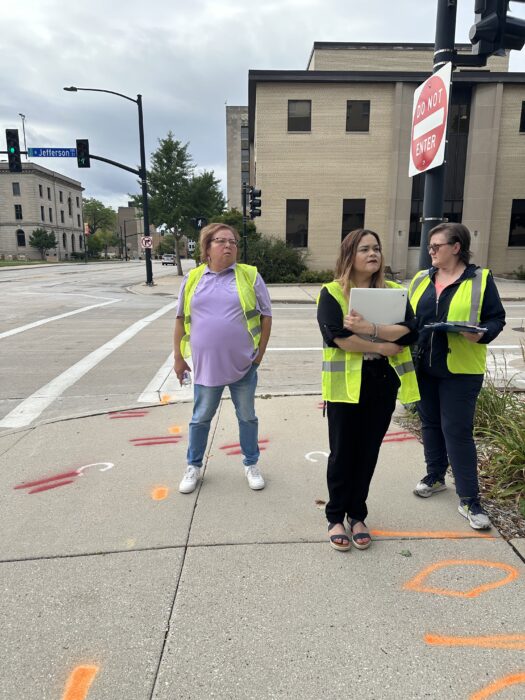
Complete Streets appears as a defined term in the glossary but is otherwise absent from the plan. Given Wisconsin’s repeal of its statewide Complete Streets law in 2015, this is a glaring omission. Even though the authors of the Active Transportation plan don’t have the power to restore Complete Streets, this plan should recommend and prioritize the restoration of Complete Streets by the state legislature in order to best achieve Vision Zero. Further, they should more clearly explain how Complete Streets principles are included in the plan to help achieve its goals, and how a statewide Complete Streets policy could help to improve the plan if it were to be restored in the future.
6. Broaden the Partnerships
The plan fails to identify important partners, including the State and local public health departments, county traffic safety commissions, and the Wisconsin Non-Driver Advisory Committee; they should have a clear role in planning and implementation of the ATP. They were far more limited with their list of collaborators. While these are critical partners, many other agencies and partners who were not at the table should also be identified. Critical partners for this work should also include transit agencies, community development departments/agencies, fire, police, and EMS commissions, automobile manufacturers, independent living services agencies, among many others. Active transportation affects far more than transportation agencies alone, and the plan should reflect that broad scope.
7. Help People Use Active Transportation for Everyday Trips
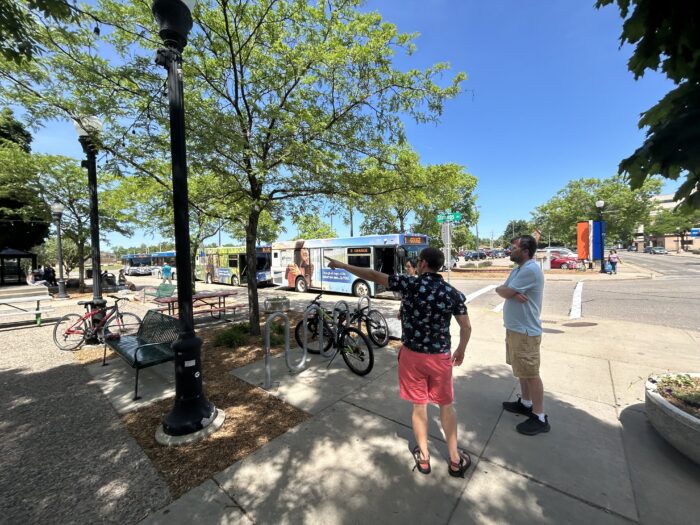
Public input reflects that many people use active transportation primarily for recreation, but also reported a desire to walk and bike more for utilitarian purposes. The plan should address that unmet demand by laying out strategies that make it safer and easier to walk, bike, and roll to everyday destinations, not just for recreation. One way to do this: make a clearer link to transit. The draft ATP mentions transit briefly, but does not reference relevant planning documents that would discuss transit plans in greater detail. Transit is one of the key factors that makes walking a viable transportation mode. Similarly, the plan could also establish a clearer link between e-mobility and its importance in making utilitarian trips more viable for a wider swath of the population. In general, more detail is needed to specify how we will go from making this an aspirational idea to seeing change in communities.
8. Discuss E-bikes and Emerging Technology
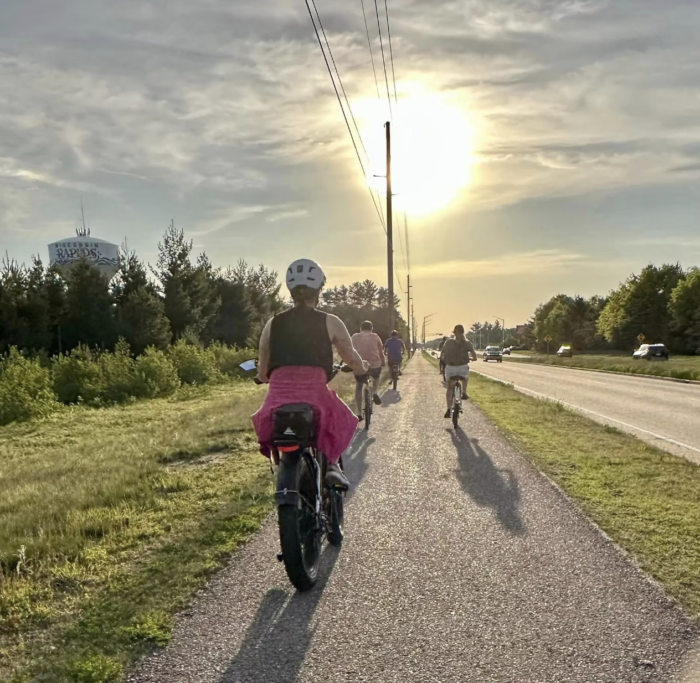
E-bikes, e-motos, scooters, and other devices offer opportunities to expand Active transportation, yet also pose challenges for Wisconsin communities as these transportation technologies quickly evolve. The plan’s coverage of e-mobility mainly includes Goal 4d, which discusses the need to update laws while also citing the need for education about our current laws. This inconsistency ignores recent conversations about the need for state-level guidance on the rapidly changing world of e-micromobility. Our ATP should proactively encourage E-micromobility technology as a way to increase active transportation, while also providing a framework to address emerging issues, such as keeping state definitions and policies current, distinguishing e-bikes from e-motos, and providing guidance that ensures safety for everyone using shared facilities. You can find Active Wisconsin’s take on e-micromobility issues and the need for state guidance here.
9. Articulate the Need to Fund the Vision
The funding section largely describes existing federal and state programs, with less clear discussion about how Wisconsin will strategically prioritize those programs to implement the improvements envisioned in the plan. Without a well-defined funding strategy, the goals in the plan are merely a wish list. Policy 6a starts by saying WisDOT should work with local communities and counties to identify funding sources, ignoring the fact that local governments’ options are largely confined to state and federal resources. The only other suggested funding sources identified in this goal are WisDNR and the Railroads. Are those really the only potential sources in Wisconsin for active transportation infrastructure funding?
Given our 49th place status for bicycle and pedestrian funding, it is imperative that the final ATP describe the state’s investment needs, gaps, and priorities, and clarify how state leaders should identify funding to enable project implementation.
10. Learn from Minnesota
Combining bicycling and pedestrian planning into one plan is not necessarily a weakness, but it should not come at the expense of detail. Minnesota’s plans provide more substance and practical information on barriers, infrastructure, funding, project prioritization, and state support for communities. Wisconsin doesn’t need to copy Minnesota, but its plan should offer a comparable level of practical guidance for turning policy into projects. To get a sense of what this looks like, you can find Minnesota’s pedestrian plan here, and its draft Bike+ plan here .
Final Thoughts: After nearly 30 years, Wisconsin should aim higher
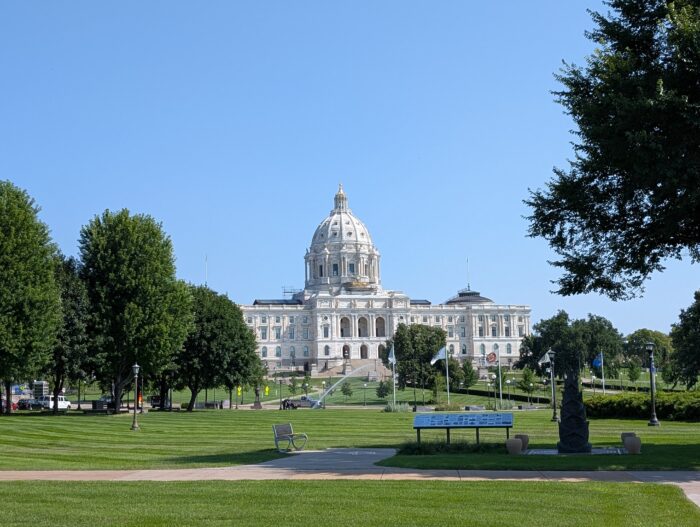
Wisconsin’s Active Transportation Plan 2050 is an important step simply because we have waited so long for an updated vision.
The real test is whether the plan changes what happens on Wisconsin’s transportation system: whether dangerous corridors become safer, vulnerable road user fatalities and serious injuries decrease, communities receive the resources they need, infrastructure becomes more connected and accessible, non-drivers have greater mobility, and more Wisconsinites can realistically choose to walk, bike, or roll for everyday trips. On that front, we have concerns.
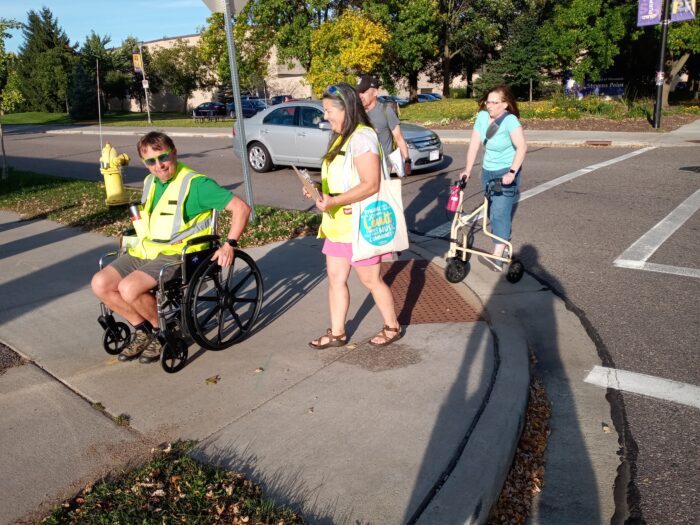
There are good ideas in the draft, but we still need higher aspirations and a clearer path from those aspirations to implementation, including concrete policies, funding commitments, agency responsibilities, infrastructure guidance, measurable outcomes, and accountability. After waiting decades for a new statewide Active Transportation Plan, Wisconsin should seize this opportunity to do more than document where we are today and outline vague goals. The plan should clearly establish where we want to go, what it will take to get there, and who is responsible for making it happen, with stronger commitments around funding, prioritization, and guidance for communities. If we can’t do that now, we should revisit the plan well before 2050 to ensure Wisconsinites ultimately get an active transportation plan that we all deserve.
The Draft Active Transportation 2050 Plan is available for review here. We encourage residents to make comments to WisDOT by October 24, 2026.