by Jen Walker, Community Programs Manager
One of the most powerful aspects of the Community Transportation Academy (CTA) isn’t just what participants hear or read. It’s what they experience.
Some of our sessions focus on expert-led content and insights, while others give people a chance to blend that learning with real-world exploration. Together, we get offline and even outside the classroom, and see transportation systems up close. When it comes to understanding how our communities work or don’t work, there’s no substitute for being there in real time.
That’s why both a Walk & Roll Audit and a Transit Tour have become a cornerstone of every CTA we’ve hosted, and are staples of our advocacy and education work at 1000 Friends of Wisconsin.
On paper, a street can look connected and accessible. But once you are out there walking, rolling, waiting at a bus stop, or trying to cross the street, you begin to notice the details that shape your experience. The width of a sidewalk. The speed of passing cars. The feeling of safety, or lack of it.
Field trips also create a shared experience. Residents, planners, and decision-makers see the same challenges together, opening the door to more grounded and empathetic conversations about what needs to change.
South Park Street in Madison: A Corridor Full of Potential and Challenges
In Madison, our experiential learning has focused on South Park Street, a place full of community assets and opportunities.
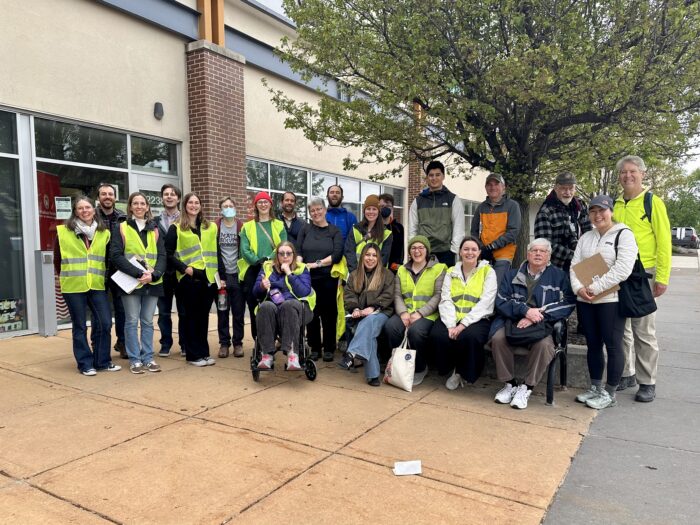
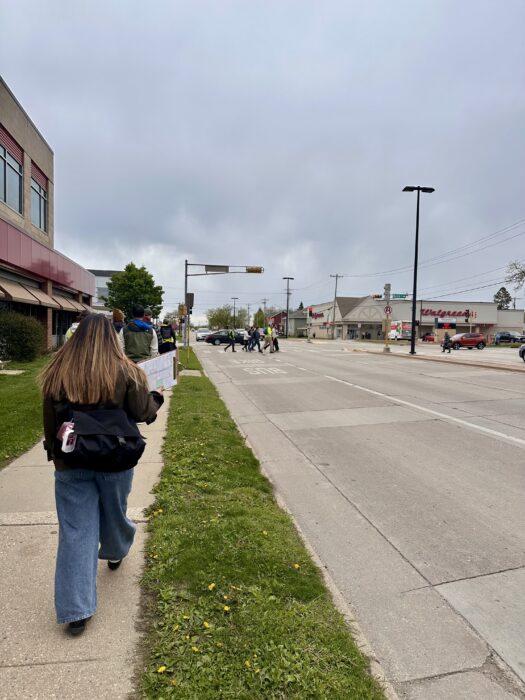
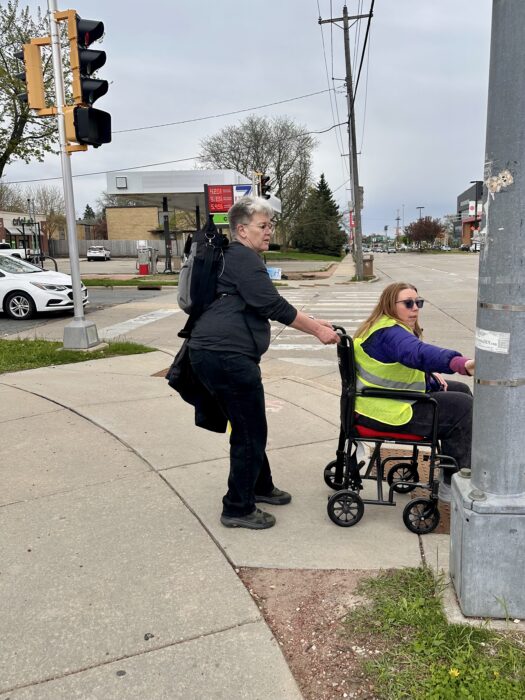
On a cloudy, late-April afternoon, we started our Walk-and-Roll Audit from our home base at the UW South Madison Partnership, a welcoming community space that has anchored our in-person sessions. From there, we ventured into a corridor that, in theory, offers everything people need within reach. Madison College, the DMV, library, public health services, local businesses, and diverse types of housing are all nearby. Just a block East, quieter Fisher Street connects to the Boys and Girls Club, parks, churches, and other neighborhood amenities. And to the west, an elementary school, more homes and apartments, businesses and services.
It is the kind of place that should work well for walking, biking, rolling, and transit. But our lived experience tells a different story. As most of us already knew, and as we quickly heard, felt, and saw from the sidewalk, Park Street is dominated by fast-moving automobile traffic that undermines safety and comfort.
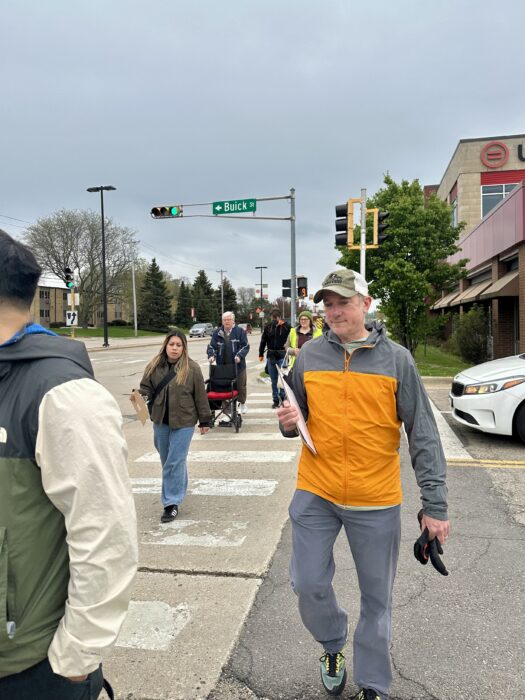
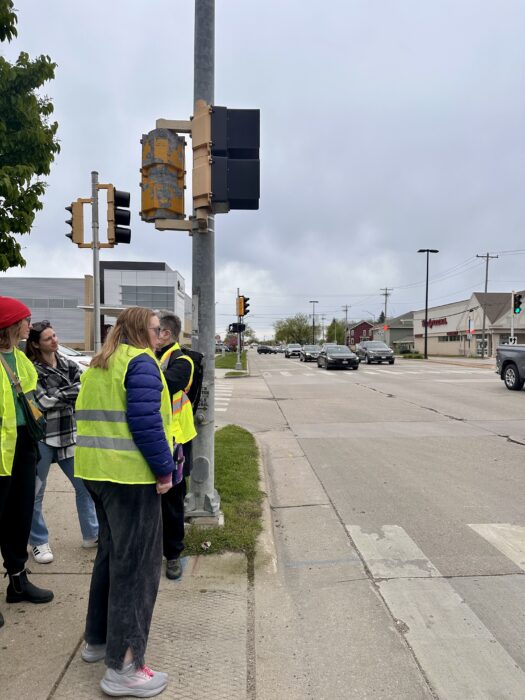
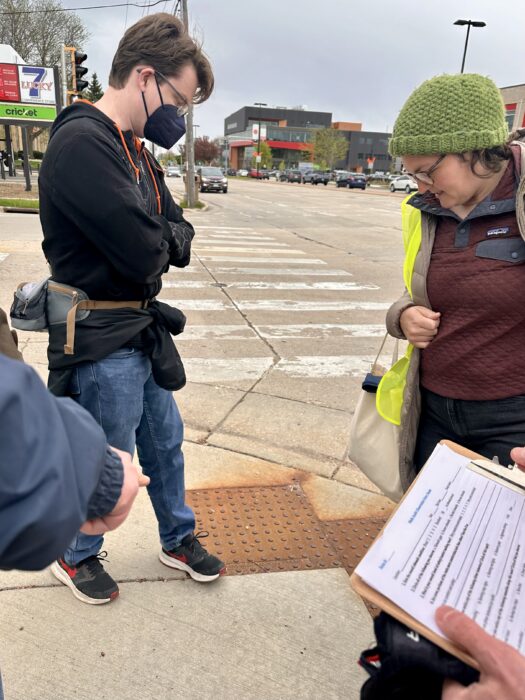
Despite a posted speed limit of 25 mph, vehicles routinely travel much faster. We met one resident who inquired about our activity, and we shared our goal of observing and recording safety improvements for people walking in the area. This person described speeding on Park Street Residents as “just horrible.” Another resident we met shared stories of recent crashes, including one where a vehicle lost control and struck a home just off Park Street.
The impact of traffic violence here is not abstract. It is deeply felt. At one intersection, memorials mark the site where a Madison high school student was killed this winter while using a designed, painted crosswalk with flashing lights as he was trying to reach the bus stop on his way to school. Our group paused there together, holding space for the weight of this senseless loss.
Moments like this remind us that transportation systems are not only about movement and accessibility, but also about protecting people’s lives.
Our Walk & Roll Audit revealed a range of current design challenges:
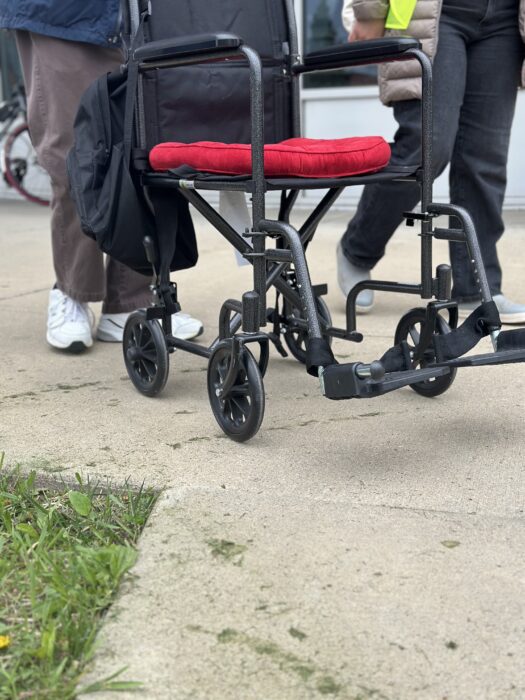
- Narrow, uneven sidewalks that limit accessibility
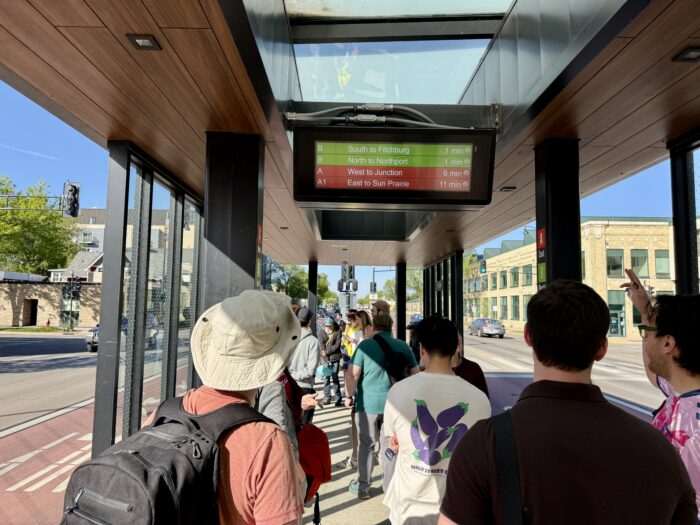
- Bus stops that are hard to locate and uncomfortable to use
- Wide intersections with long crossing distances
- Street designs that encourage risky mid-block crossings
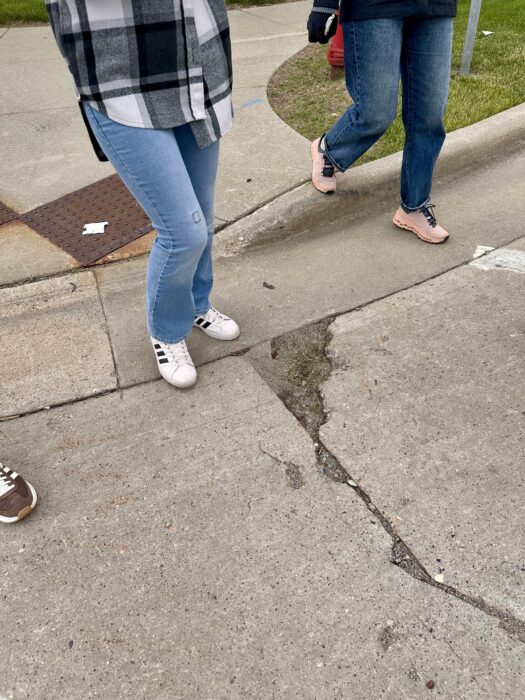
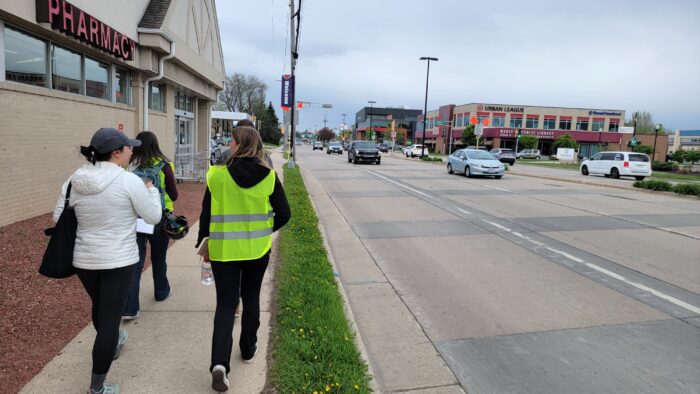
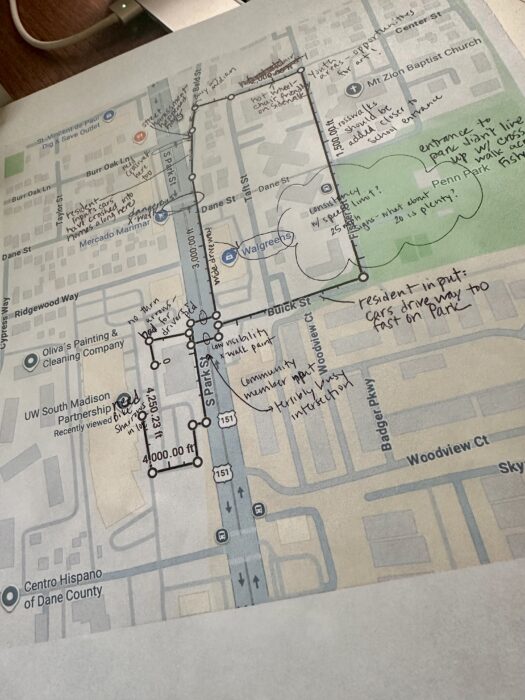
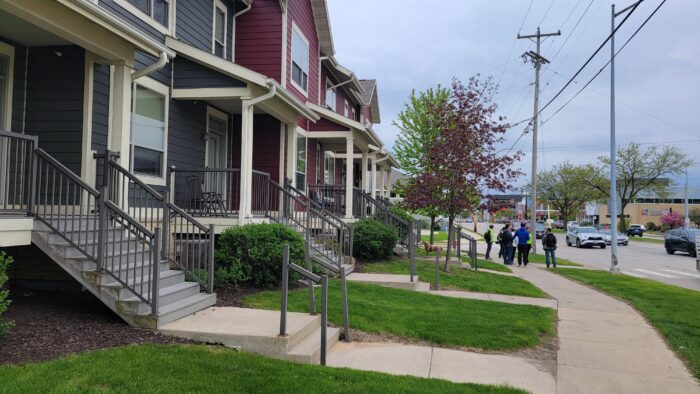
At the same time, the potential for improvement is clear. As a group, we identified practical opportunities such as wider sidewalks, safer crossings, better transit amenities, and creative placemaking like murals near the Boys and Girls Club to make the corridor feel more welcoming and connected.
The Power to Make Change
As we’ve been learning in the Community Transportation Academy, governance is one of the more complex challenges in transportation planning. South Park Street is controlled by the Wisconsin Department of Transportation, which limits the city of Madison’s ability to make changes.
But that could soon shift. Plans are underway for the corridor to transition to local control, giving Madison more flexibility to redesign the street with safety and accessibility in mind. This change is closely tied to another major investment in Madison: Bus Rapid Transit (BRT).
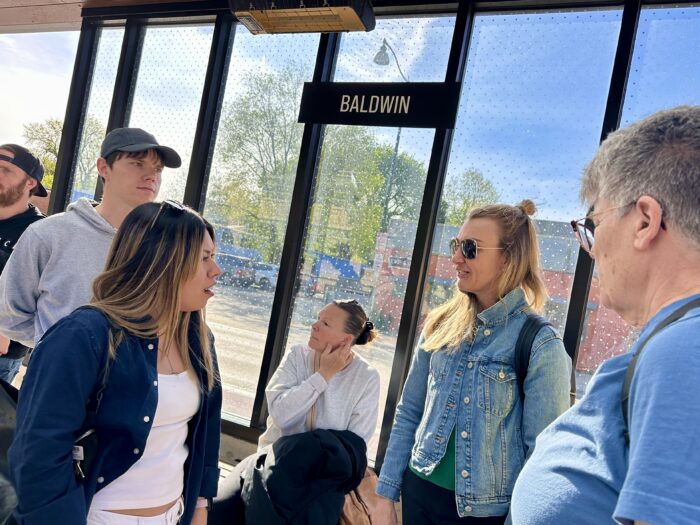
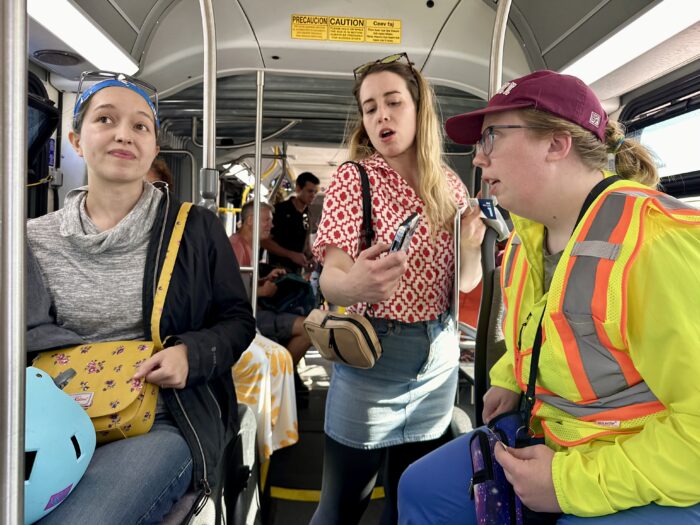
Just a few weeks after our Walk & Roll Audit, our group experienced firsthand where the BRT is heading – literally and figuratively! On a beautiful May afternoon, we boarded the BRT B line right on Park Street. What was meant to be a structured group discussion turned into something more organic. Small conversations, one-on-one connections, and shared observations unfolded along the ride.
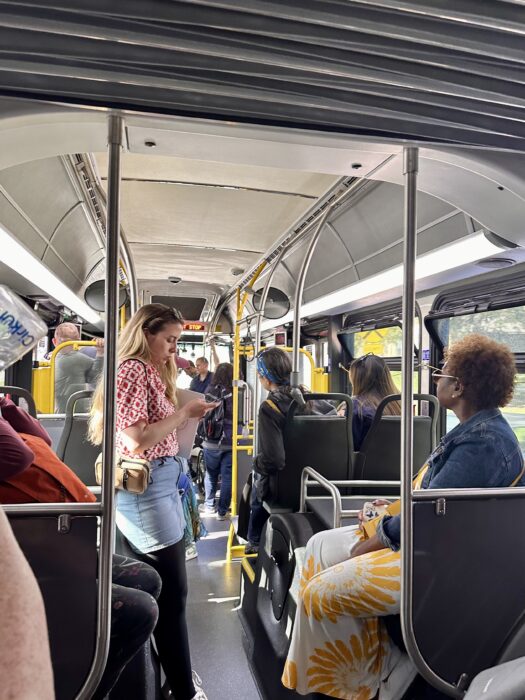
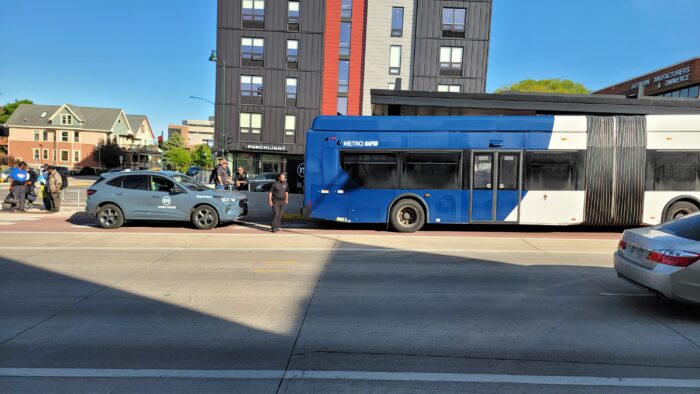
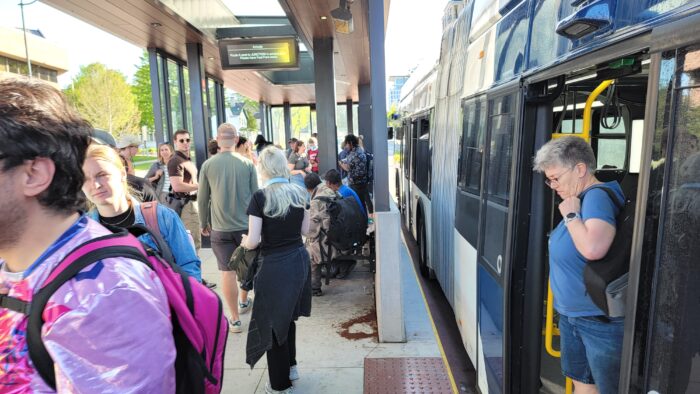
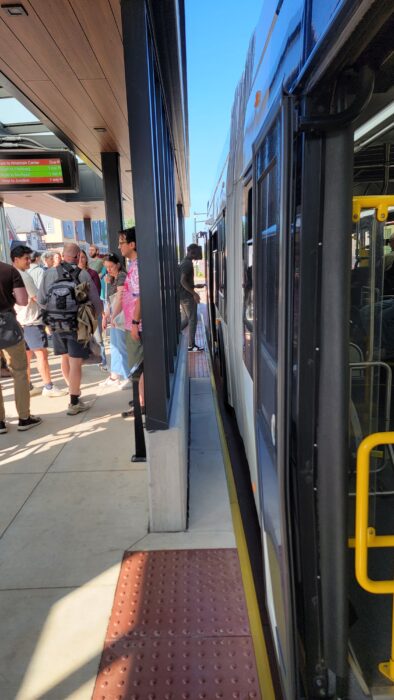
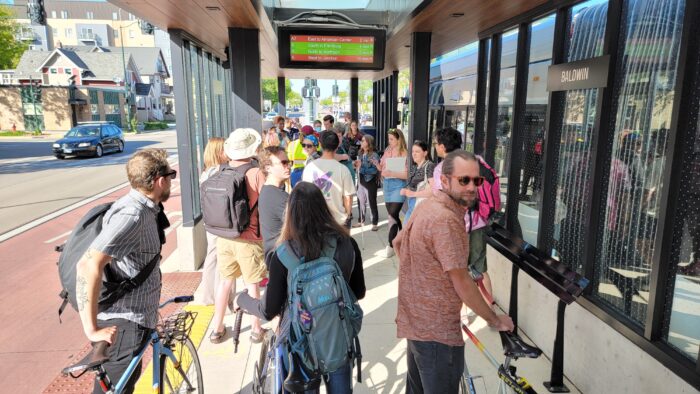
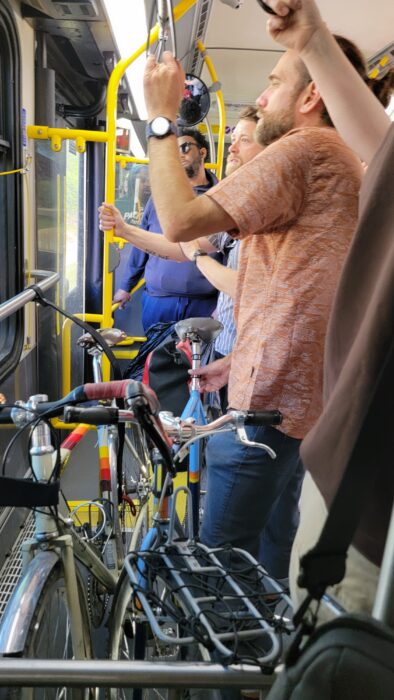
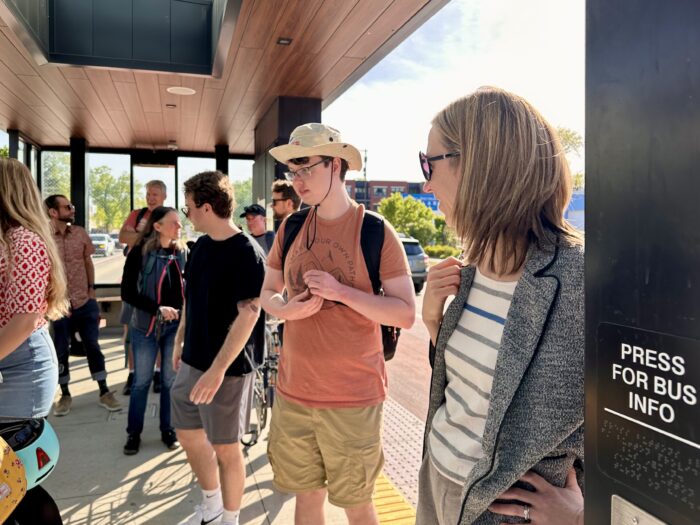
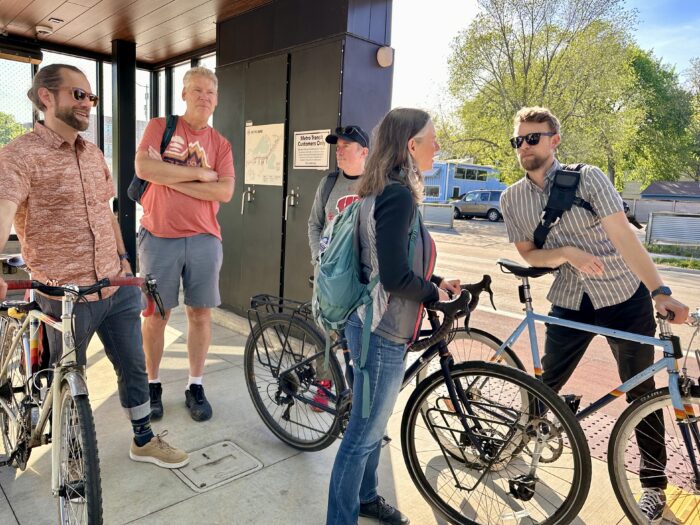
In many ways, our Transit Tour reflected one of transit’s greatest strengths: the ability to bring people together. Unlike driving alone, transit creates space for interaction and community. The ride even included a brief breakdown and transfer, which was handled smoothly by Madison Metro staff. That too became part of the shared experience.
Seeing the system in action reinforced a key idea from earlier sessions: infrastructure shapes behavior. With BRT, the investment is visible and permanent. Alongside land-use policies like the Transit Oriented Development overlay zone, it signals commitment, attracts development and residents, and supports less car-dependent land uses. Over time, this creates a virtuous cycle.
We often hear about “induced demand” as a challenge, where more road capacity leads to more driving. The same principle can work in our favor. When we invest in high-quality transit, we can create demand for a system that benefits the whole community, leading to connection rather than congestion.
It’s exciting to know that Madison’s progress is drawing attention. Just weeks before our CTA tour, a delegation from Chicago visited to see the BRT system in action and explore what it could look like in their own city. Local investments like this can ripple outward, inspiring broader change.
Bringing the Experience Home
At its core, the CTA experience is about more than learning how transportation systems work. It is about seeing your community differently, imagining what it could become, and gaining new tools to help shape that future. It builds on what participants already know, while connecting them with peers, local leaders, and decision-makers.
Standing at a busy intersection, riding the bus alongside neighbors, pausing together in remembrance. These shared moments deepen our understanding of place and show what is possible when people come together to improve their community.
This week, our Madison CTA cohort comes full circle. Participants will share the projects they have been developing throughout the Academy, bringing forward their ideas, insights, and vision for change, and tapping into one of the key principles of the program itself – elevating community voices and strengthening relationships is essential to creating lasting, local impact.