
By Ken Smith, Housing Policy Director

The month of May had fewer housing events to attend, but we continued the work of connecting with people and organizations in the housing sphere to move more housing onward in Wisconsin.
May Recap:
- On May 7, Tehila and I attended the University of Wisconsin – Extension’s Southeastern Wisconsin Regional Summit at the Milwaukee County Zoo’s Zoofari Center.
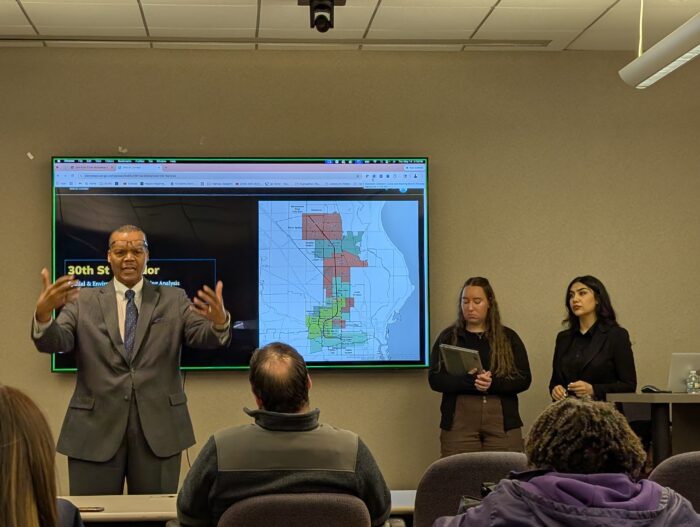
- On May 14, I attended the student “Race, Class and the Just City Lab” class project presentation of three University of Wisconsin – Milwaukee students under the tutelage of Professor Kirk Harris. The presentation was held at the Century City Tower in the 30th Street Corridor on the former A.O. Smith industrial campus.
- I also did a deep dive on community land trusts, a proposed solution to help with housing affordability. Please see “Are Community Land Trusts the Solution for a More Justice-Oriented City?”
- Tehila contemplated the cultural significance of her native Jerusalem Stone and Milwaukee’s Cream City Bricks, while Ali pondered why we’re choosing to live near each other again!

More housing solutions are as important as ever, for Zillow has found that, in Milwaukee, for example, “Milwaukee is one of the hottest rental markets in the country, . . . with its projected vacancy rate standing as the lowest among the nation’s most competitive rental cities.” The Milwaukee Metropolitan Area has a 3.8 percent projected vacancy rate, when a healthy vacancy rate is 15 percent. Single-family rentals have also grown by 8.4 percent in 2023, versus a national growth rate of 4.4 percent. Research from Pew suggests that building more housing will create moving chains of affordability. At the Southeastern Wisconsin Regional Summit last month, we were able to dive even deeper into the data and housing issues in the state’s southeast region.
The Southeastern Wisconsin Regional Housing Summit (May 7, 2026)
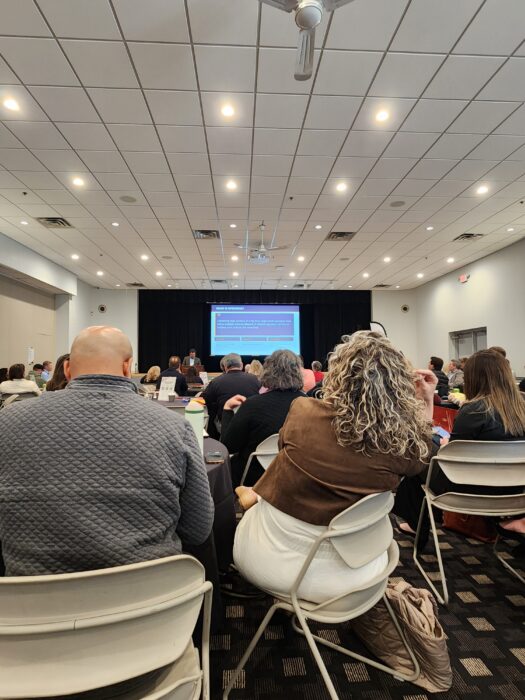
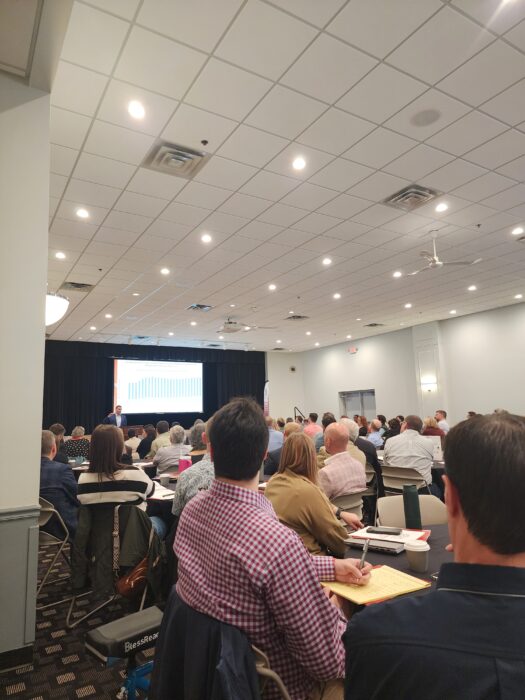
This symposium focused on the metropolitan planning region of the Southeastern Wisconsin Regional Planning Commission (SEWRPC) and the Milwaukee 7 (M7), the economic development arm of the Metropolitan Milwaukee Association of Commerce (MMAC). This area consists of Kenosha, Milwaukee, Ozaukee, Racine, Walworth, Washington, and Waukesha Counties.
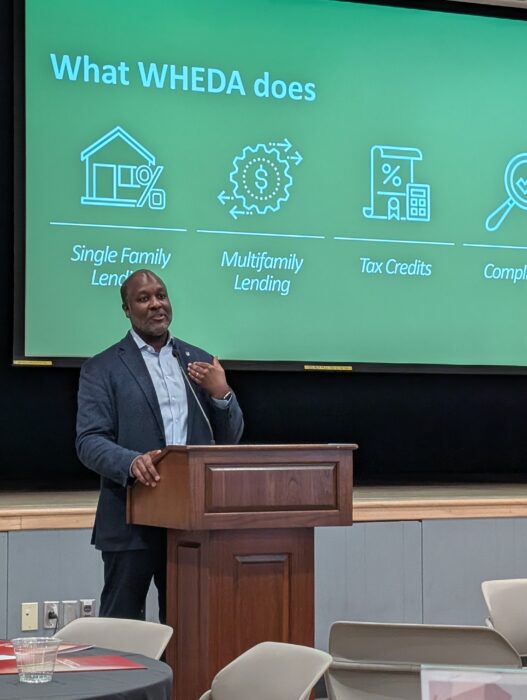
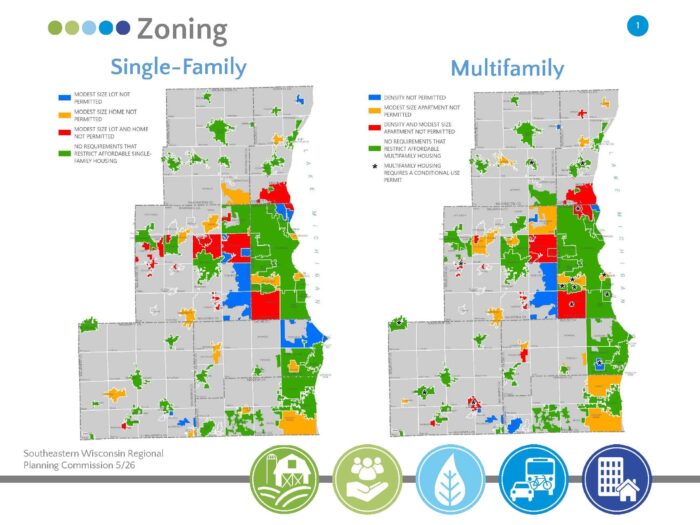
Deputy Director Ben McKay of SEWRPC shared two maps (below) of how certain local policies have constrained the housing supply and made the number and affordability of homes more out of reach. Smaller lots and smaller home sizes face restrictions, if not outright prohibition, in many parts of the region. Further, density beyond single-family detached homes (including modest multifamily buildings like duplexes up to apartment buildings) faces restrictions or outright prohibition in much of the area.
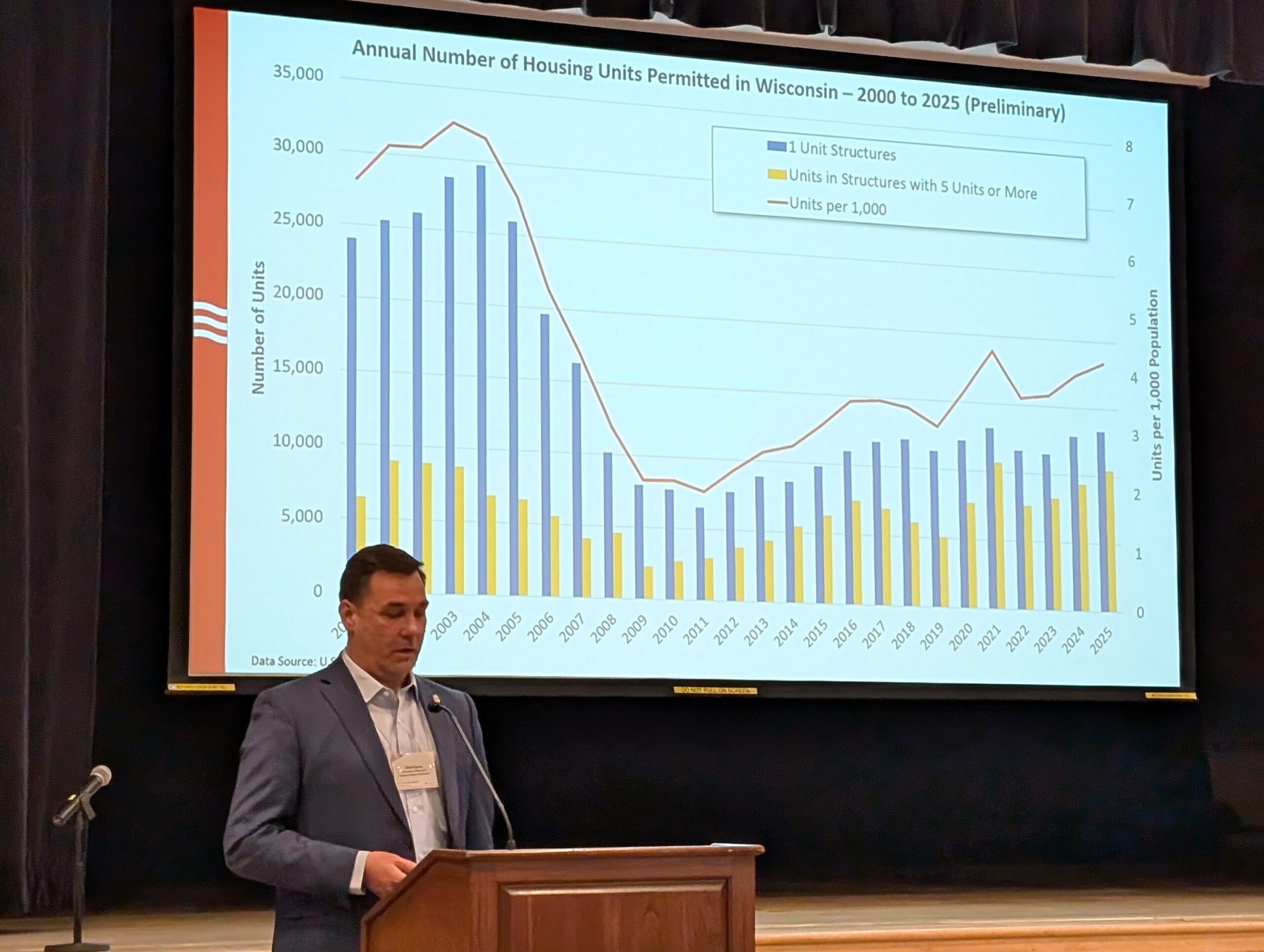
Following McKay, Community Development Specialist Matt Kures of UW-Extension explained “Southeastern Wisconsin Housing by the Numbers.” The overview was comprehensive, describing housing production and population projections, among many other housing data.
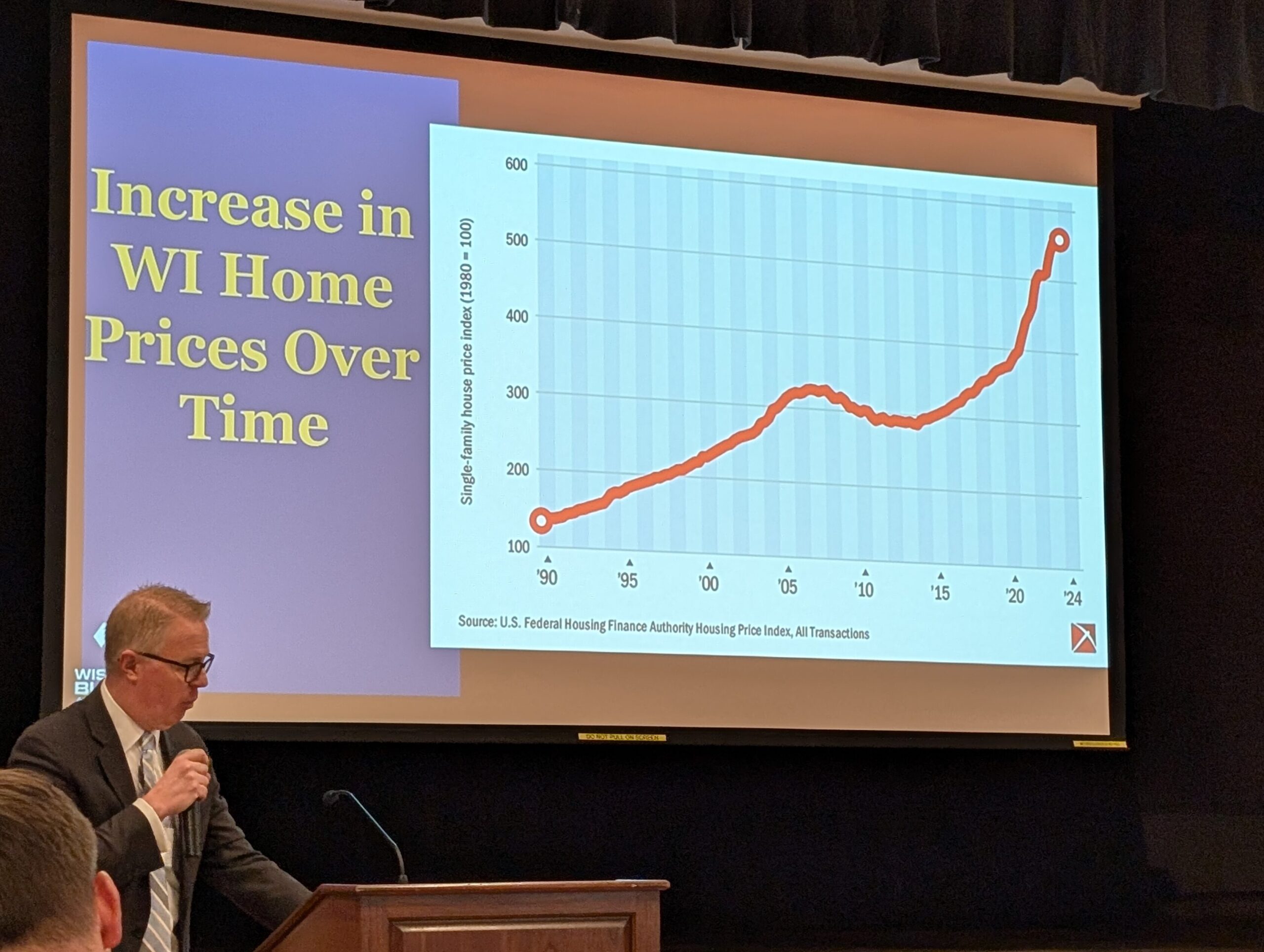
Like other reports nationally, household sizes in Wisconsin are shrinking, which puts additional pressure on the existing housing stock by creating greater demand. With greater demand, not enough new supply has been built – the level of new construction has never recovered from the Great Recession. Even with recent new construction, the percentage of renter versus owner-occupied housing units has not changed much.
In 2024, the US Census Bureau reported just under 50 percent of renter households were cost-burdened, meaning at least 30 percent of their household income was spent on housing. Kures’ UW-Extension presentation noted how renters in and around the southeast region are more likely to be cost-burdened.
A factor making it more difficult to build more units is the fact that the population in Wisconsin and the southeast region is graying, meaning there are fewer workers to do the same amount of work as older workers leave the workforce. To solve this problem, there needs to be more “natural increase” (more babies born) and/or more “net in-migration” (more people moving to Wisconsin and the region).
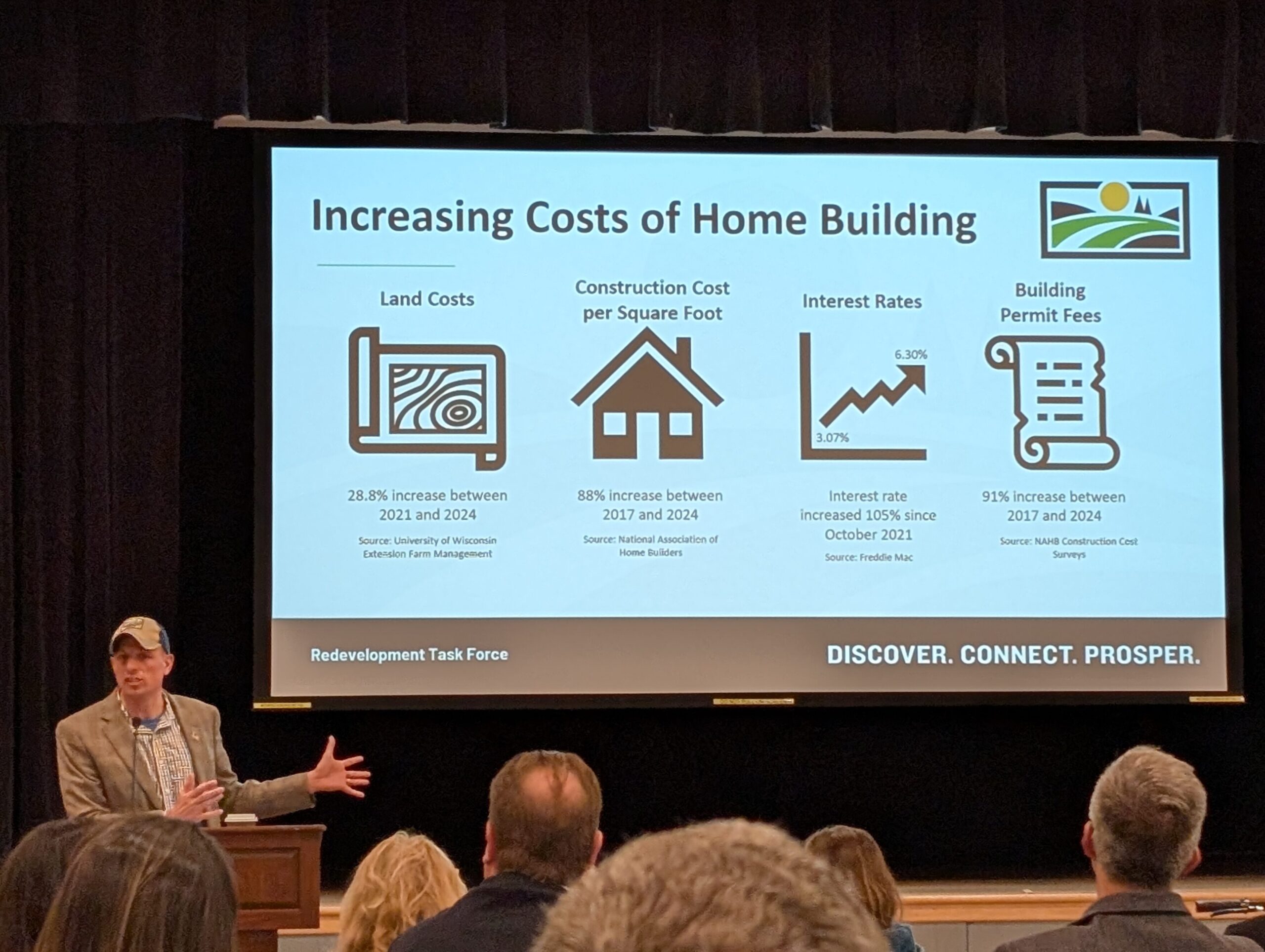
After Kures’ presentation, there were two rounds of breakout sessions with different housing-related emphases. One breakout was led by Washington County Executive Josh Schoemann on “From Dollars to Doors: Driving Housing Solutions Through Creative Financing.” He explained his administration’s Heart & Homestead Funding incentives and Next Generation Housing which make it relatively more affordable to live in Washington County. The new home prices are relative because the cheapest ones were still priced at $320,000, a price well out of reach of that county’s median household income of $86,189 in 2024, based on US Census Bureau data. Though Schoemann admitted as much. He also expounded in part upon how parents and grandparents need to allow for opportunities for their children to live in the same communities they grew up in and have their own opportunity in the pursuit of happiness, rather than resort to NIMBYism (the not-in-my-backyard phenomenon).
NIMBYism was the topic of the final keynote lecture, led by University of Wisconsin – Madison Associate Real Estate Director Paul Aylesworth: “Affordable Housing & the NIMBY Challenge.” NIMBYism is the bipartisan reaction of existing homeowners to any new development or change to the neighborhood based on real or most often perceived dangers, or often simply resistance to change. Aside from resistance to change itself, the arguments most cited by NIMBYs relate to fear of increased traffic, crime, or changes to “neighborhood character,” and a hatred of renters.
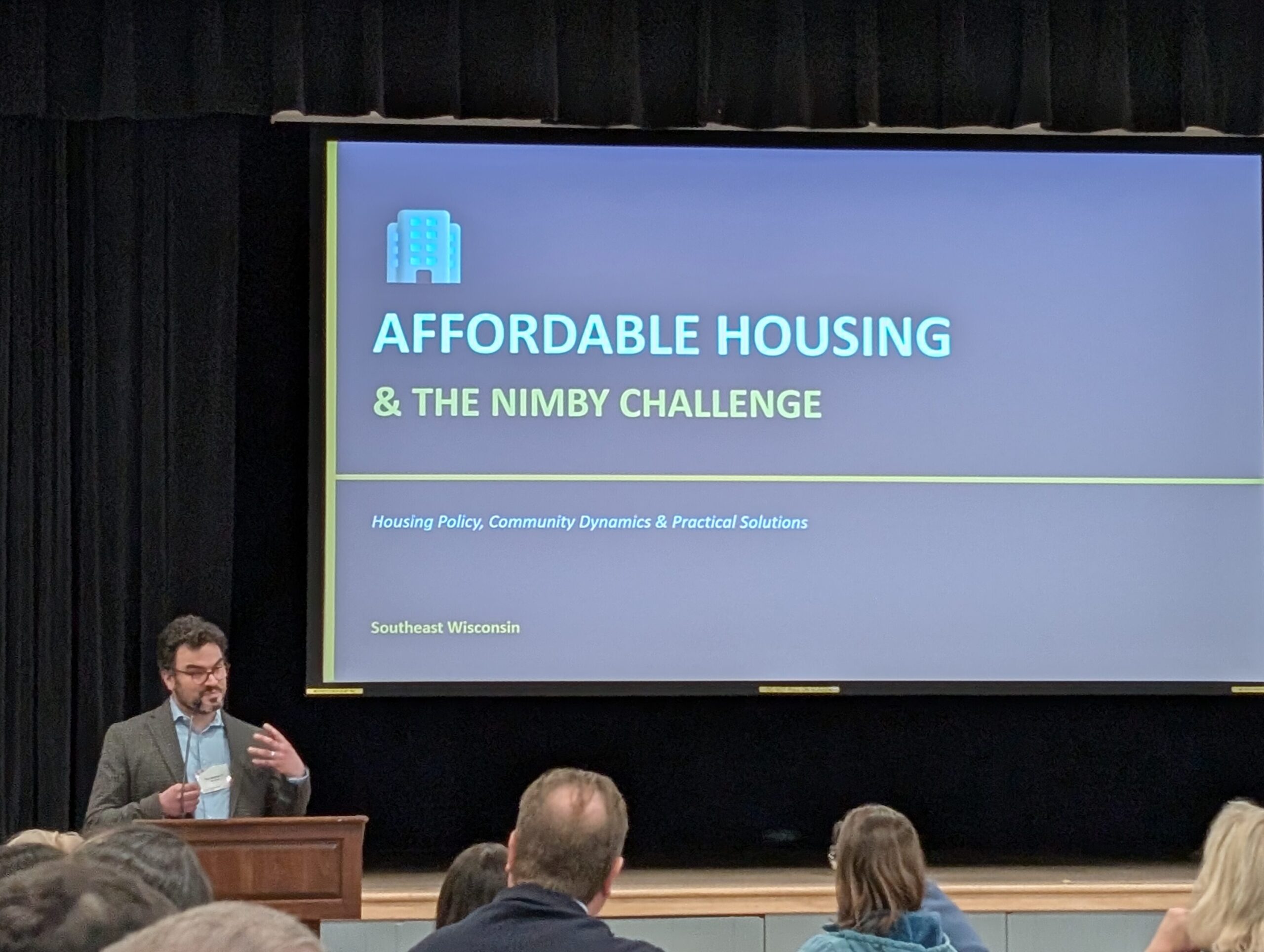
Most, if not all, developers have experienced NIMBYism at one time or another. Aylesworth is no exception. His presentation detailed the trials and tribulations of NIMBYism and how it often makes development projects more expensive or even prevents progress on increasing the single-family and multifamily housing supply. His lecture featured a case study of a project in Philadelphia that he worked on. Aylesworth eventually found success by doing community outreach to allay concerns and organizing enough YIMBYs (yes-in-my-backyard people) to make it politically feasible for the city to proceed with the approval process.
During 2024 in Milwaukee, the mayor’s initiative to upzone (allow for more and denser housing) faced opposition from wealthy NIMBYs on the city’s east side, as well as those in disadvantaged neighborhoods who were vocally afraid of displacement, further feeling there was insufficient community outreach to them. A small measure of community outreach is the work of Professor Harris’ “Race, Class and the Just City Lab” class project presentation relating to the installation of the proposed multi-use trail along the 30th Street Corridor.
Race, Class, & the Just City – Student Lab (May 14, 2026)
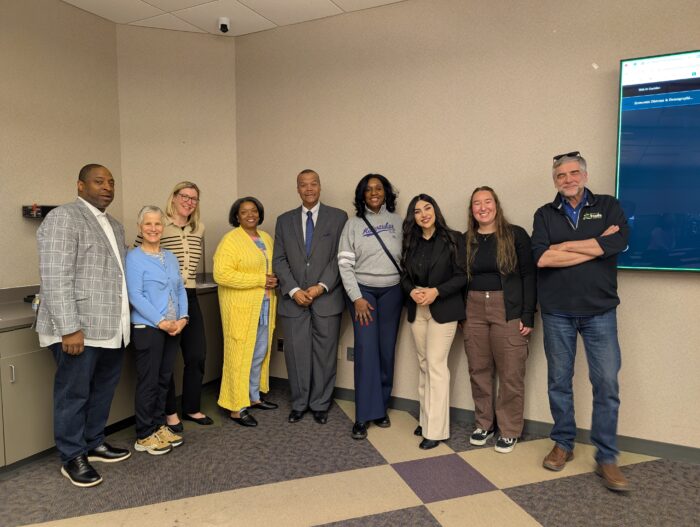
On May 14, Professor Harris’ students, Darya Salehi and Kelli Beine, presented their class project, which was also produced in collaboration with Sean Mattson, who was unable to be present. Representatives of the BID #37, City of Milwaukee officials, and community members also attended.
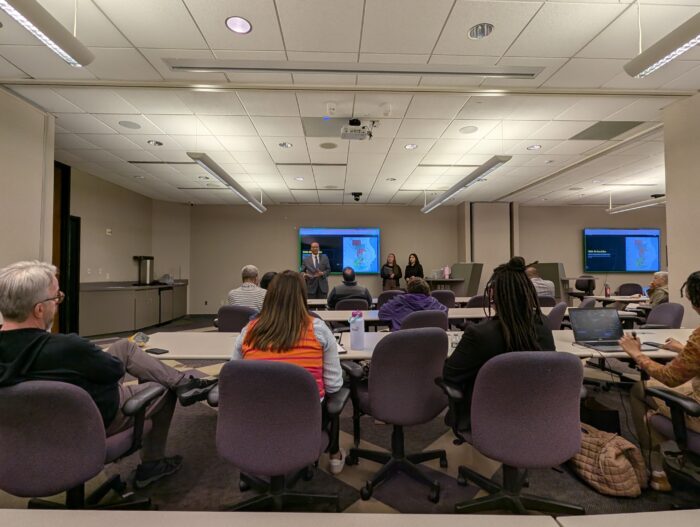
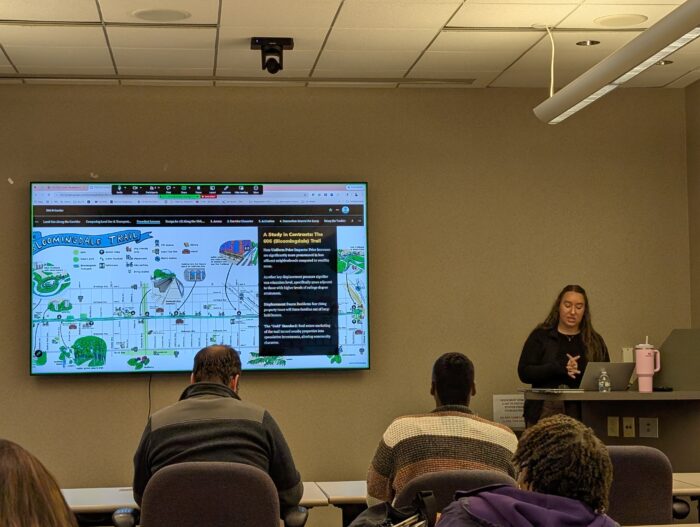
The students analyzed the area surrounding the 30th Street Corridor, spatially visualizing demographic data with Esri Geographic Information System (GIS) software. The 30th Street Corridor, a geographic area and Milwaukee Business Improvement District #37, roughly corresponds with a rail right-of-way roughly parallel to N. 30th Street and the former A.O. Smith campus, now the Century City Business Park. Milwaukee County is studying how part of the rail right-of-way may be converted into a multi-use path to provide an 18-mile recreational trail further connecting the Hank Aaron State Trail with the Oak Leaf Trail. This new trail will provide a new recreational opportunity to an area lacking in trail connectivity and may facilitate economic development.
The students further envisioned how the proposed mixed-use trail could be used as an economic development tool with a housing component to build wealth in the community.
And one way some argue wealth can be built is via community land trusts. Please see “Are Community Land Trusts the Solution for a More Justice-Oriented City?”