What We’re Learning in the Madison Community Transportation Academy
By Jen Walker, Community Programs Manager
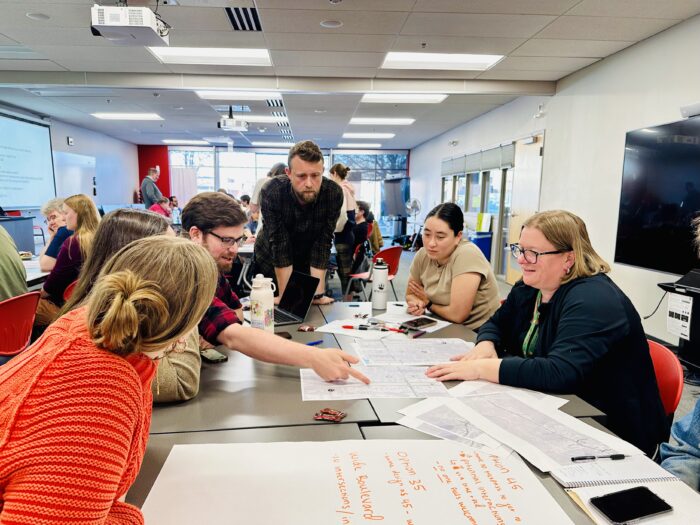
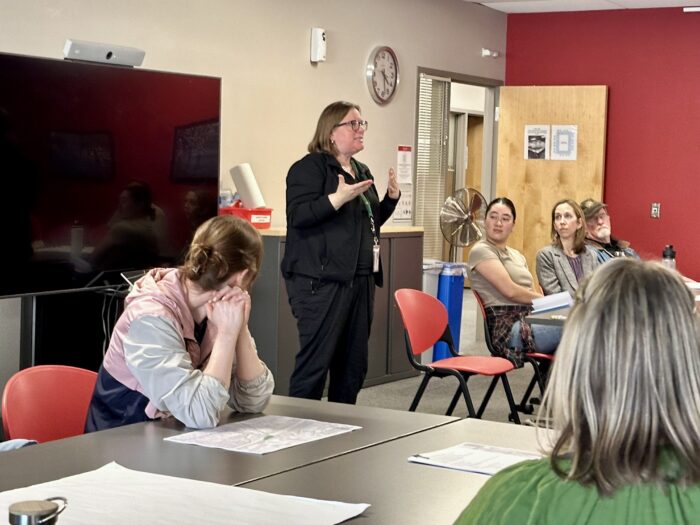
People who signed up for the Madison Community Transportation Academy started with an intuitive sense that transportation shapes almost everything else: which jobs we can reach, whether kids can safely cross the street, how easy it is to visit a park or a friend, and which neighborhoods see investment (or don’t). Hearing these ideas through the stories and experiences of others helps them stick with us powerfully and memorably. Our cohort of 35 participants is in the middle of that learning process right now. The program, which runs through June 4, builds confidence, skills, and connections so people can get involved in future transportation advocacy opportunities in ways that are as diverse as the group itself.
Learning together is the point
A Transportation Academy is not just a class. Over 10 weeks, we become a community through the connections made by people in the room. This spring’s cohort includes students, retirees, and professionals in healthcare, biotech, communications, education, tech, and faith leaders. Some come with advocacy experience; others are new to transportation conversations. What they share is a curiosity and willingness to wrestle with real-world tradeoffs.
On the first day, we shared photos of what is and isn’t working in our daily travel routines. It set the tone for a foundational idea: as Veronica O. Davis writes in Inclusive Transportation, “Transportation Is Personal.” Our histories and routines shape what we notice, what we fear, and what we work towards. We’ve also explored how past policies like redlining and urban renewal still show up in today’s maps and outcomes, and how that context should shape conversations about the future.
Access, not just movement
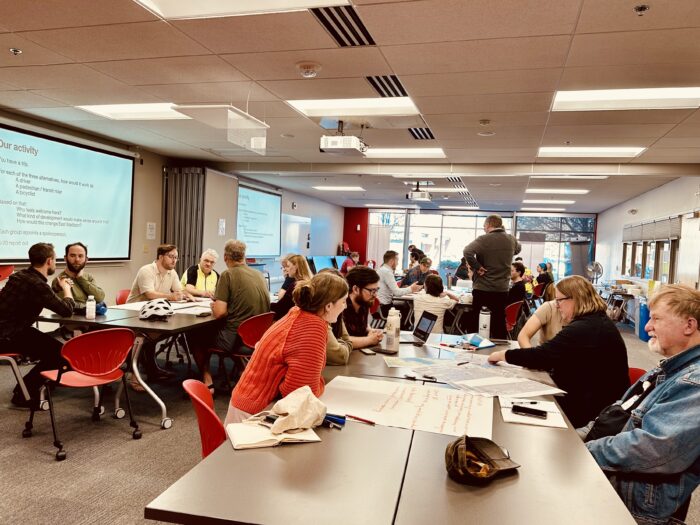
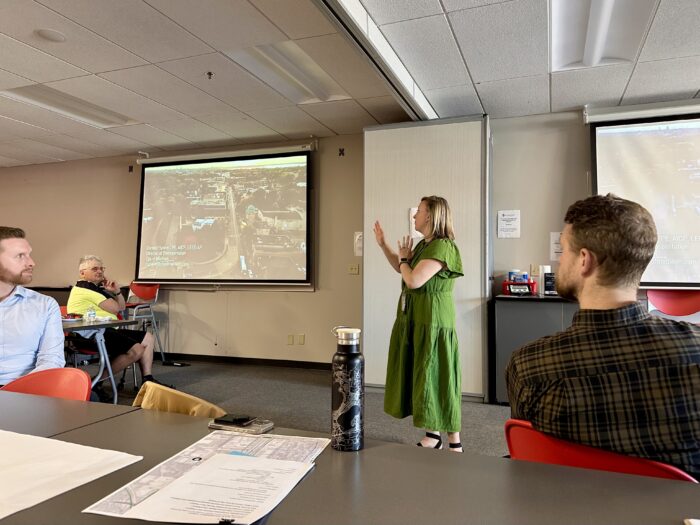
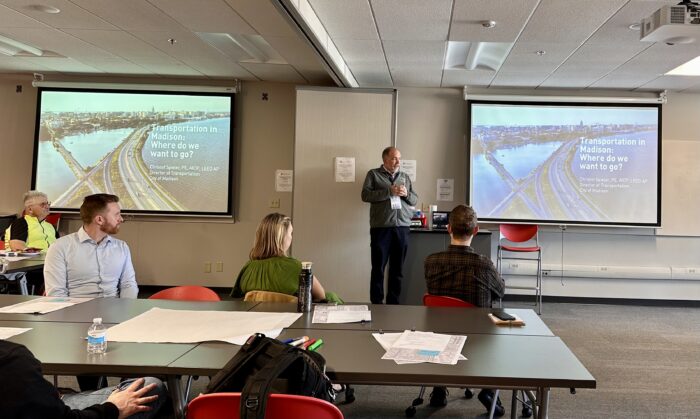
One big “aha” moment so far, presented in a powerful way by Christof Spieler, Madison’s Director of Transportation, is that transportation isn’t just about how fast we can move. It’s about access, and whether we can reliably reach the places that matter within a reasonable amount of time, without needing to own a car. We also talked about a key tradeoff – designs that prioritize higher car speeds require more space and can make it harder to build the walkable, transit-supportive density that many people say they want. In other words, transportation isn’t only technical. It’s political, because it reflects what makes places special and what we choose to prioritize.
A real-world case study: South Stoughton Road
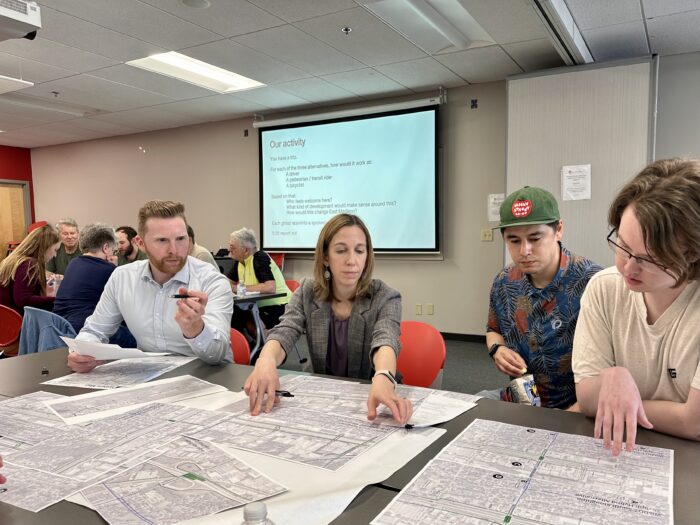
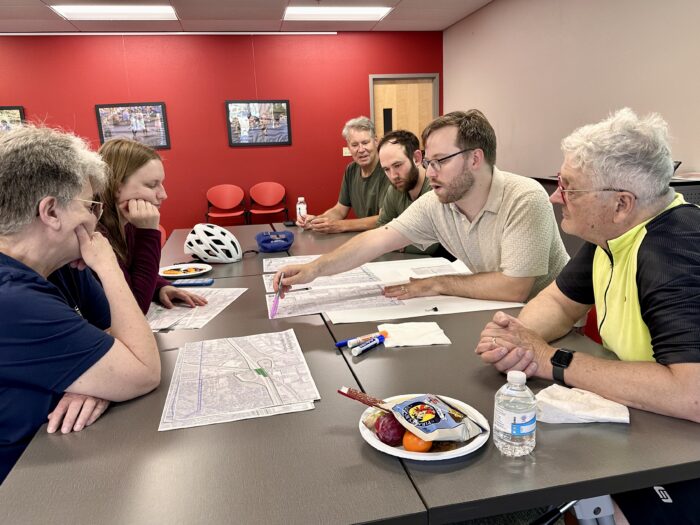
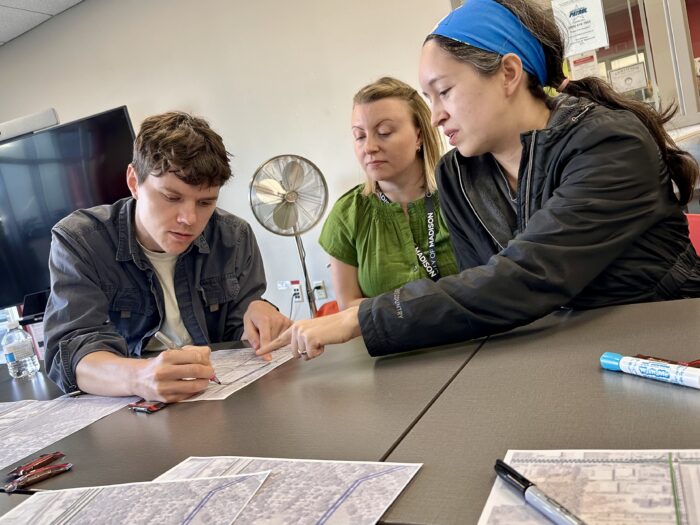
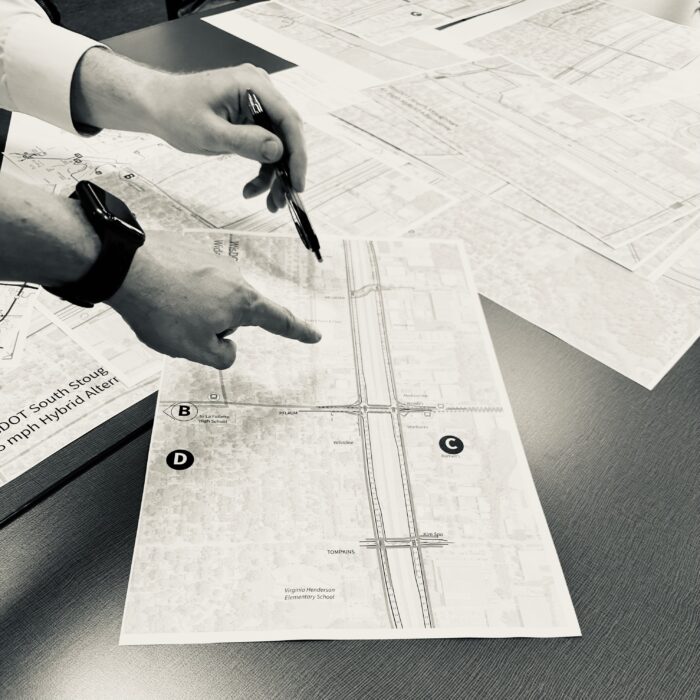
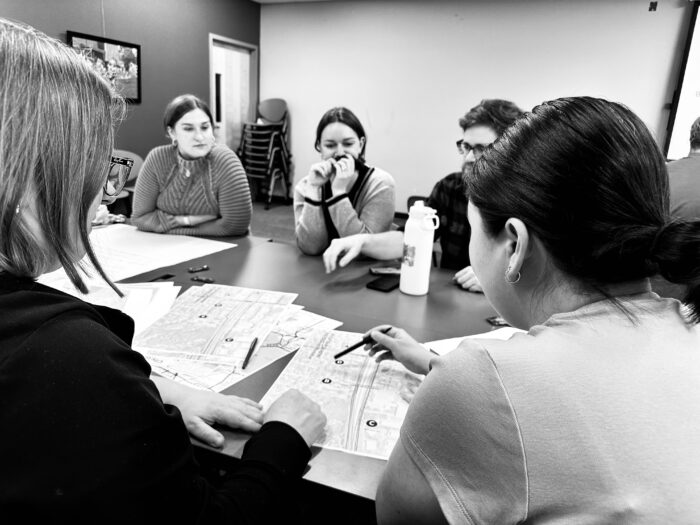
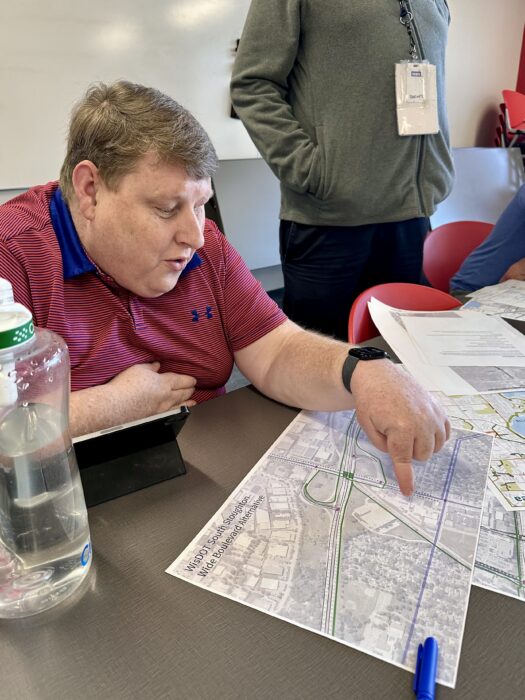
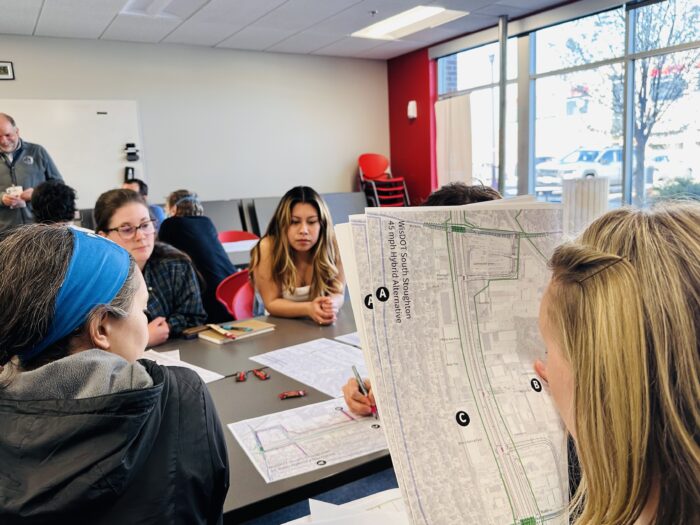
To illustrate these concepts, Spieler and four additional city staff and leaders facilitated an innovative workshop to explore a corridor many Madisonians know well: South Stoughton Road, a state-owned road that also functions as a major city street. With WisDOT currently studying redesign options, choices about layout, design speed, crossings, and intersections will influence safety and development for decades. (You can find WisDOT’s public involvement page for South Stoughton Road here).
We looked at options under consideration:
- 35 mph wide boulevard: a lower-speed, more “city street” approach
- 45 mph traditional widened highway: a higher-speed design that expands highway-style capacity
- 45 mph hybrid: similar to the widened highway, with more overpasses at cross streets
In small groups, participants compared maps and talked through likely impacts on safety, transit reliability, walking and biking, nearby neighborhoods, and future growth. A consistent theme emerged. If we treat Stoughton Road as a place where people live, work, and cross the street – rather than somewhere people simply drive through – different priorities rise to the top. No option felt perfect, but the consensus saw the wide boulevard as most aligned with goals like safer crossings and a more complete, connected corridor. This was especially true when paired with the supportive city policies on housing and transit, and other development investments that this option alone would unlock.
Safety: designing streets that don’t cost lives
As in past academies, we also spent time on the human cost of roadway design, drawing on Dangerous by Design with Heidi Simon, Director of Thriving Communities at Smart Growth America, and city Vision Zero and bike/ped city staff. We looked at the systems that Madison uses to prioritize the needs brought forward by residents in a fair and impactful way, and explored a wide range of practical questions and implementation examples. We also referenced Wes Marshall’s book Killed by a Traffic Engineer to question the data, assumptions, and incentives that shape design decisions. We asked why certain streets see repeated serious crashes, and what it takes to change that. One challenge in many cities (including Madison) is that some of the most dangerous corridors are state-owned, which can make improvements slower and more complicated. But the goal is straightforward: streets where people can make everyday trips without the risk of severe injury or death.
What’s next for the cohort
In the next stretch of the Academy, we’ll get out into the city with a Walk & Roll Audit (an on-the-ground look at how safe and comfortable a corridor feels for people walking, rolling, and crossing) and a Transit Tour with Madison Metro staff and local leaders, to better understand rider experiences and how to use transit. We’ll also learn how regional planning works, how regions cooperate over time, and how those decisions shape what’s possible locally. Finally, we’ll explore the many ways people and organizations advocate for fair, accessible transportation, so participants can see where they might plug in (or forge new paths).
In our final session on June 4, participants will give short presentations on topics they select and research. Ideas are already taking shape, and we’re excited to hear the questions, insights, and proposals this cohort brings forward. We’re also looking forward to staying connected through a statewide Transportation Academy Alumni Network that we formed in early 2026.
Transportation decisions can feel distant until a project actually shows up on your block, or you identify a need for change. The Community Transportation Academy helps close that gap by building skills, relationships, and practical knowledge. If you care about safer streets, better transit, and neighborhoods where more people can thrive, we hope you’ll follow along, share your perspective, and stay engaged as Madison’s Academy moves forward. And keep an eye out for Academy alumni in communities across Wisconsin, whose projects and ideas continue to influence the communities where they live.